Venganza en Flor: Milena Muzquiz in Her First Solo Exhibition at the Museo Raúl Anguiano
In collaboration with Travesía Cuatro, Milena Muzquiz (Tijuana, 1972) presents her work at the Museo Raúl Anguiano in Guadalajara: her first solo exhibition in a museum in Mexico. The show is open through April 12.

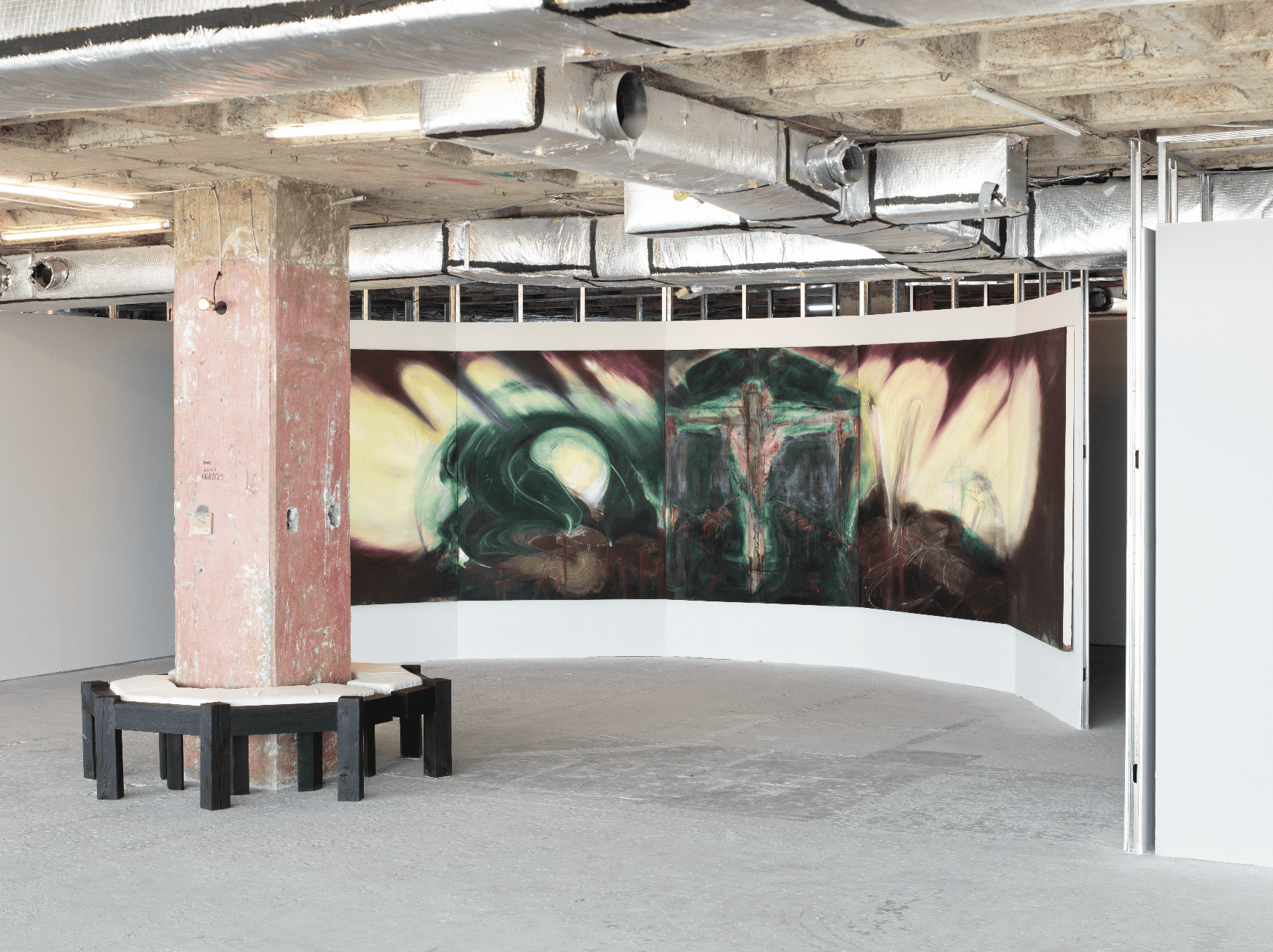
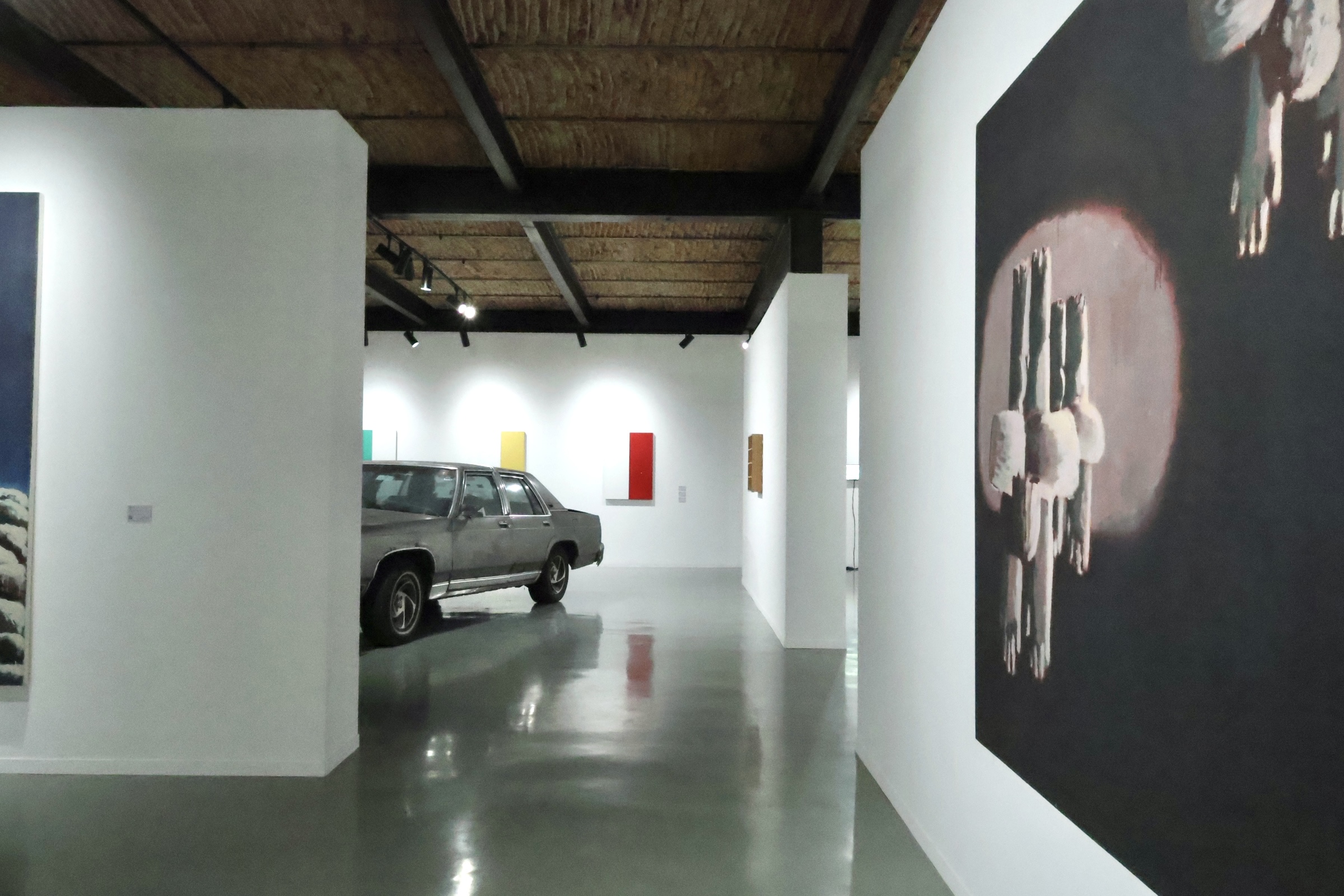
The works in Venganza en flor are an invitation to contemplate the constant dialogue between control and accident — two forces that govern Milena Muzquiz's artistic practice. Through a combination of pictorial and ceramic techniques, while reframing the use of utilitarian objects, the artist seeks to evoke in the viewer experiences and memories tied to a certain material nostalgia. The exhibition brings together oils, large-format paintings, and a series of glazed ceramic fountains that occupy the center of the exhibition with remembrances of totemic columns of water and clay.
Milena Muzquiz's multidisciplinary practice combines painting, ceramics, and the utilitarian object, all under a strong influence of performance. Her experience with the collective Los Super Elegantes (an initiative she co-founded with Martiniano López Crozet in the nineties) profoundly shaped her individual work. Music as mass entertainment, its malleable quality and the fantasies it arouses can be read in the artist's interest to incorporate participatory elements and in modifying how the viewer relates to the exhibition space. Through playing with scale, large format, and the absence of a predefined path, it becomes possible as a viewer to experience the works from a place of confusion, curiosity, and nostalgia.
The large-format paintings do not necessarily hang from the walls; instead, they rise like curtains, like folding screens that reorganize the space and compel the viewer to move around them. The surfaces of the paintings are loaded with flowers, golden chains, human figures, and objects that seem to have emerged from a dream: a repertoire of familiar images, perhaps from the artist's childhood, in which any grip on reality eventually gives way to abstract interpretations and meanings that shift depending on the viewer. The curatorial text by Marco Valtierra articulates this with precision: "The artist's practice is built through a constant negotiation between control and accident. Painting entails accepting a partial loss of mastery, allowing drying time, stains, and errors to become inscribed on the surface. Ceramics introduce another tension, between hardness and ruin, while displacing painting toward volume and space. In this intersection, the works suggest possible uses while also foregrounding their failure: painting spills beyond the plane, and ceramics oscillate between utility, structure, and vestige."

But it is the series of ceramic fountains, Sin City, that anchors the entire exhibition in a different dimension. Once again, any predefined use dissolves to make way for varied interpretations of the object's identity. They are sculptures, fountains, and three-dimensional paintings all at once. Their surfaces are intervened with floral motifs, profile figures, graffiti text, and geometric patterns that evoke printed fabrics. Running parallel to the large-format works, the Shoe gazer series articulates another dimension of nostalgia: six paintings of variable dimensions incorporating denim fabric, illuminated ceramics, metal chains, and iron-forged lettering. The titles of the pieces (Bedroomcore, After Hours, Blur Phase, Faded Reverb, Payback, Midnight Loop) seem to evoke a sonic aesthetic close to shoegaze and nineties alternative indie — a coincidence that may not be accidental. Muzquiz operates in a territory where material nostalgia and popular culture merge with a formal investigation into the limits of painting and the art object. The exhibition's title itself, Venganza en flor, comes from a playful approach to words that seeks to create movement between concepts and the fusion of elements. In the artist's own words: "I like contradictions. A title like Venganza en Flor mixes something negative with something positive. [...] By using terms from pop culture — like musical trends and youth language — I feel it's a way of situating the work in its time and creating a new relationship with a contemporary audience."
The exhibition is part of the Museo Raúl Anguiano's commitment to promoting artists and practices that expand painting beyond its traditional forms. Venganza en flor can be visited at the museum, located at Av. Mariano Otero 375, Colonia Moderna, through this Sunday, April 12.

Exhibitions at Travesía Cuatro
Other exhibitions on view at Travesía Cuatro's Guadalajara space continue through May 23. El teatro de Miriam is an exhibition dedicated to the work of Miriam Inez da Silva (Trindade, Brazil, 1937 — Rio de Janeiro, 1996), a Brazilian painter and printmaker who for decades was catalogued as a naïf artist. The exhibition, curated by Cristiano Raimondi, seeks to dismantle this classification. Da Silva's work is built from the memory of her hometown and her academic training, depicting images of weddings, circuses, popular festivals, and scenes of fantastic everyday life. The exhibition is a continuation of the project presented last year at the gallery's Madrid space, bringing together works by the artist from 1970 through the early nineties, reappraising a body of work that critics of her era in Brazil dismissed as naïve, traditional, and "primitive" through a colonial and biased lens.
Also at Casa Franco — designed by Luis Barragán and current Guadalajara home of Travesía Cuatro — is La espera, a solo exhibition by Sonoran artist Miguel Fernández de Castro. The installation draws from the artist's own experience in the Altar desert, where he lives and conducts artistic research into the border, territory, and the social dynamics that traverse it. The work, lit like a forensic or theatrical scene, proposes a reading from the outside — one in which violence becomes an object of observation: its normalized experience no longer overwhelms because it has become part of the landscape.
El teatro de Miriam and La espera can be visited at Av. La Paz 2207, Col. Americana, Guadalajara, through May 23, 2026.

.jpg)
.jpg)