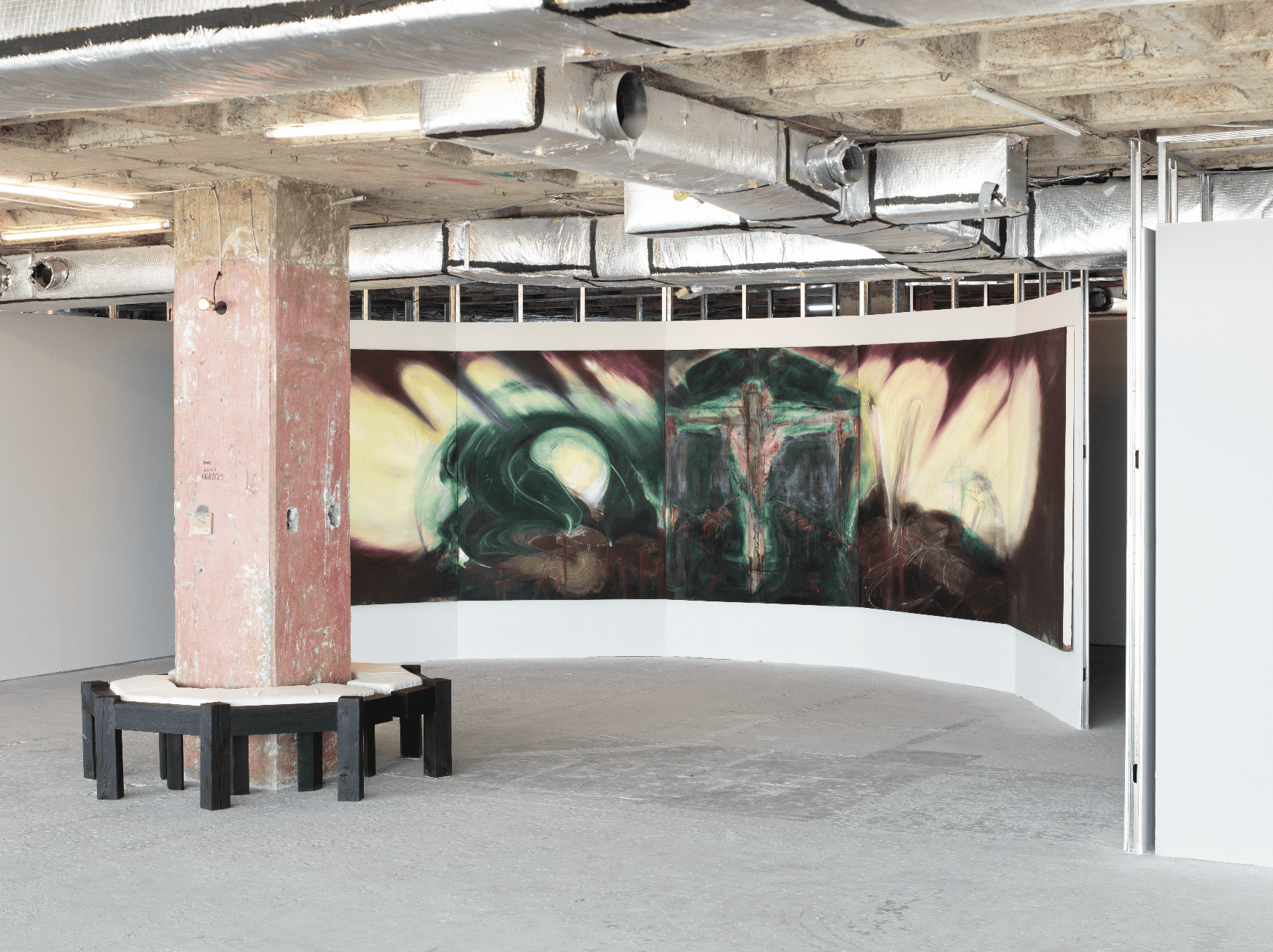
Parody as a Reflection of the Institutional Figure: Museo Cabañas Inaugurates Guggensito by Eder Castillo
Within the framework of International Museum Day, Museo Cabañas, in collaboration with the Government of Jalisco, invited the artist to present his work Guggensito, a recreation of the Guggenheim Museum in Bilbao, last May 19th on the esplanade of the Hospicio.
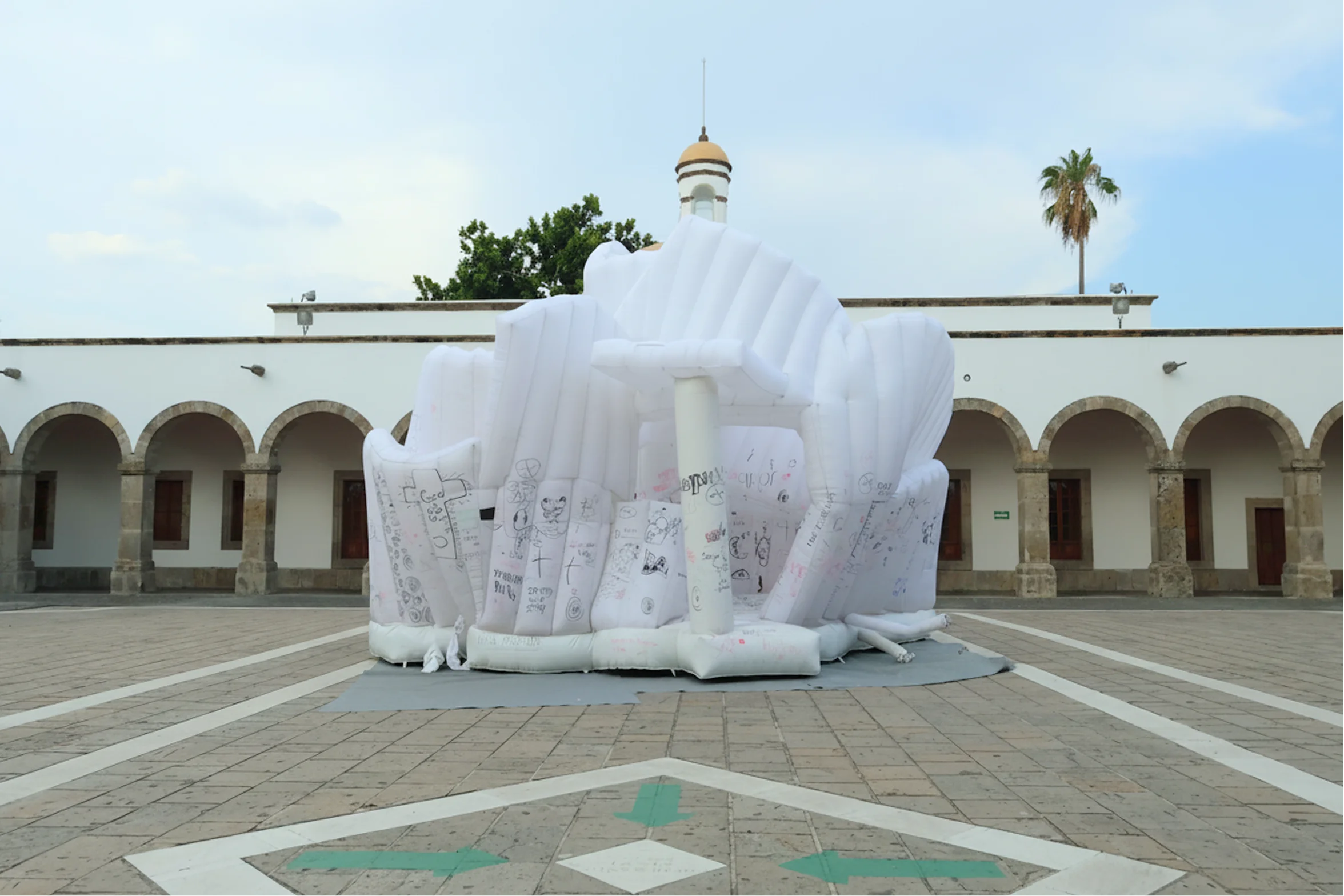
In celebration of International Museum Day, Eder Castillo, visual artist, inaugurates his work Guggensito in one of the characteristic large patios of Museo Cabañas. With a humorous formality, the artist invites people to "enter" the work — a miniature recreation of the Guggenheim museum in Bilbao — by cutting a red ribbon.
Museo Cabañas, in collaboration with the Government of Jalisco, invited the artist to present his work Guggensito last May 19th on the esplanade of the Hospicio. The inflatable ouvre, made with waterproof canvas, similar to a children's slide and weighing almost two tons, is a parody, an invitation to reimagine the relationship of the museum figure with its community. The rigidity or flexibility with which the community is invited to participate, unconditional freedom of speech, and the distance of the institutional figure are some of the themes the work seeks engage the spectators with. The canvas material itself — flexible, elastic, and malleable — seems to indicate an implicit vision of what the museum could be; a platform to expand the community's experiences.
The idea for this work was born from the announcement by the Solomon R. Guggenheim Foundation about its plans to build its first branch in Mexico in 2007, selecting the capital of Jalisco as the chosen city to host a Guggenheim Museum. The project, whose implementation required a considerable investment of resources, was cancelled in 2009. This event generated in the artist a fundamental question: Is it necessary to make a monumental expenditure to commission new architectures in a country like Mexico, having cultural and architectural richness, with so many cultural spaces and open-air museums?
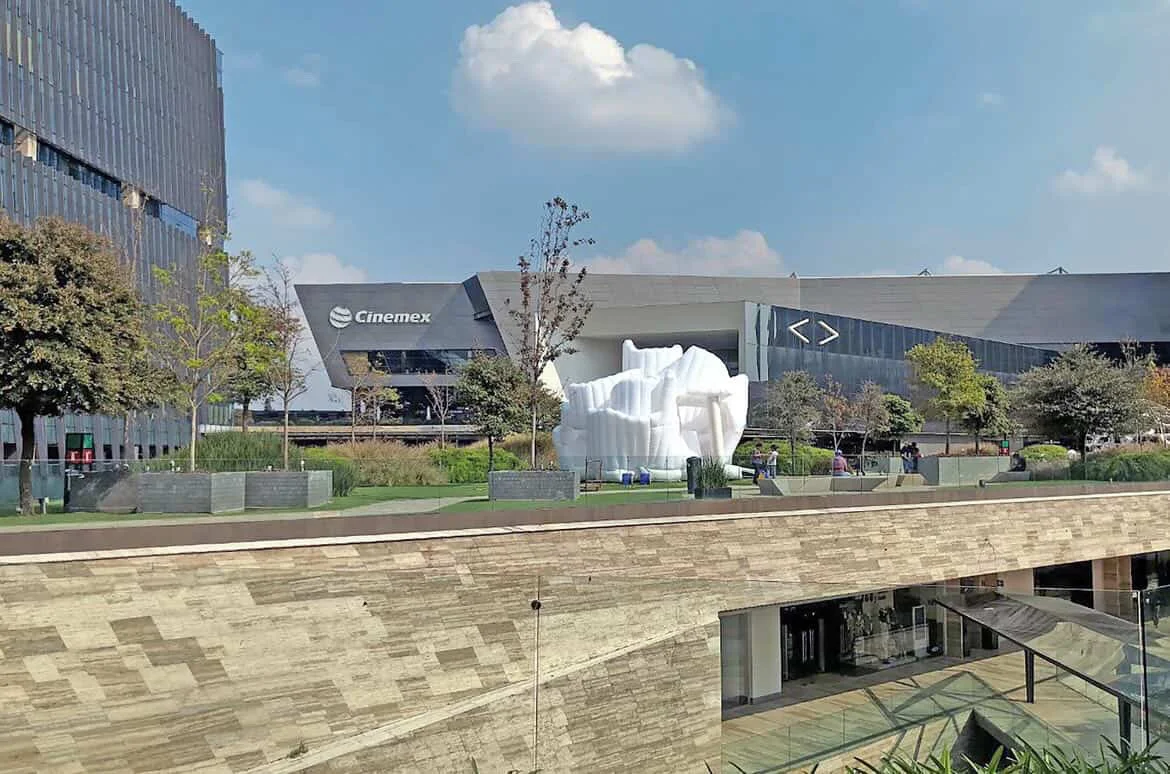
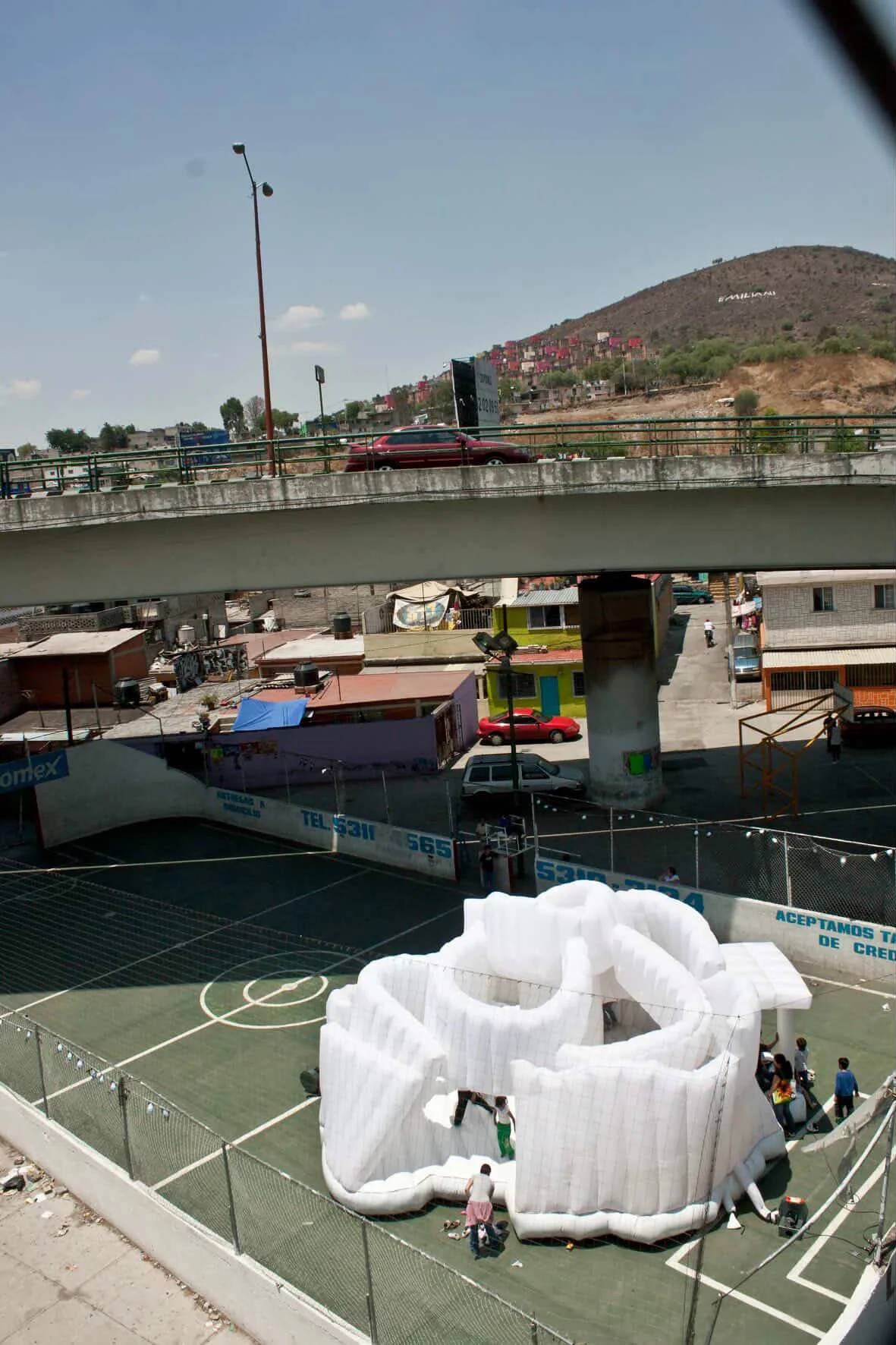
Public space, architecture, and its relationship with social structure are themes that motivate Eder Castillo in the creation of his work. The proposal of Guggensito responds to the lack of initiative of international foundations and institutions in recognizing the historical value of existing architecture in Mexico. It is through parody, through this fake and affordable recreation of an iconic museum, that Guggensito emphasizes that the potential of a museum lies in its intrinsic capacity to generate social dynamics beyond architecture. In the artist's words: "Hence the work does not operate in its formalism, in which it is only contemplated, but is instead open precisely to participation: touching it, transgressing it, intervening in it. This already allows one to ask as well to what extent the artist has control over the work and at what point the public ceases to be a spectator and becomes a participant in both the creative process and the cultural experience."
One aspect that is particularly important to the artist are the traces of use that remain marked on the piece. There are three versions of the work that have traveled through various regions of Mexico, Central America, and the Caribbean, beginning in 2011 and its latest version having been made in 2024. Interaction with Guggensito is completely free of charge and it has passed through museums and galleries, but also social events such as weddings, quinceañera parties, birthdays, and presentations in parks and neighborhoods. The intention is that the work, or the museum, visits unique places where the dynamic is dictated by the community, leaving a trace of its interaction with it. Although the presence of this piece inside a museum might seem like a contradiction, Laura Bordes, Director of Education at Museo Cabañas, tells us that by holding this event with Eder Castillo's work, the aim is to establish and document a dialogue about the museum figure with other museums in Jalisco. Art, in the end, is an exercise in imagining other possibilities.

Being a work that can be assembled and disassembled, Guggensito is designed to be destroyed, but it is also designed so that the public may question itself about its permanence and materiality. The digital era has allowed us to create a record of all lived experience, originating perhaps from humanity's obsession with generating memory. However, Eder Castillo emphasizes with his work that although the vestiges of memory are important, it is even more important that memory be constructed from the community's experiences. Monuments and buildings, which are signs in themselves, lose meaning when they distance themselves from lived experience and become institutional monoliths. The work, by constantly transforming itself, protects itself, according to the artist, from the stream of slop images by generating real meaning — that is, meaning that stems from social dynamics and not from images that evolve and are optimized in formalism but lack substance.
Slang — or street knowledge — can be a resource that the museistic figures can leverage to remain relevant in the era of art without authorship. Laura Bordes compares the path to that of ruderal plants; having no path available to grow, they create their own by breaking through the asphalt that blocks their access to sunlight. Just like ruderal plants, the micro cultures generated in everyday life find ways to adapt in order to protect themselves from the hegemony of the algorithm. It is precisely in this limbo, where the total automation of technology has not yet managed to absorb the substance of reality, that new creative possibilities are created, perhaps creating new spaces and formats in which to relate to art.
Guggensito can be visited at Museo Cabañas until May 29, 2026. Admission is free on Tuesdays. For more details, the museum's website can be consulted at https://museocabanas.jalisco.gob.mx/


.jpg)