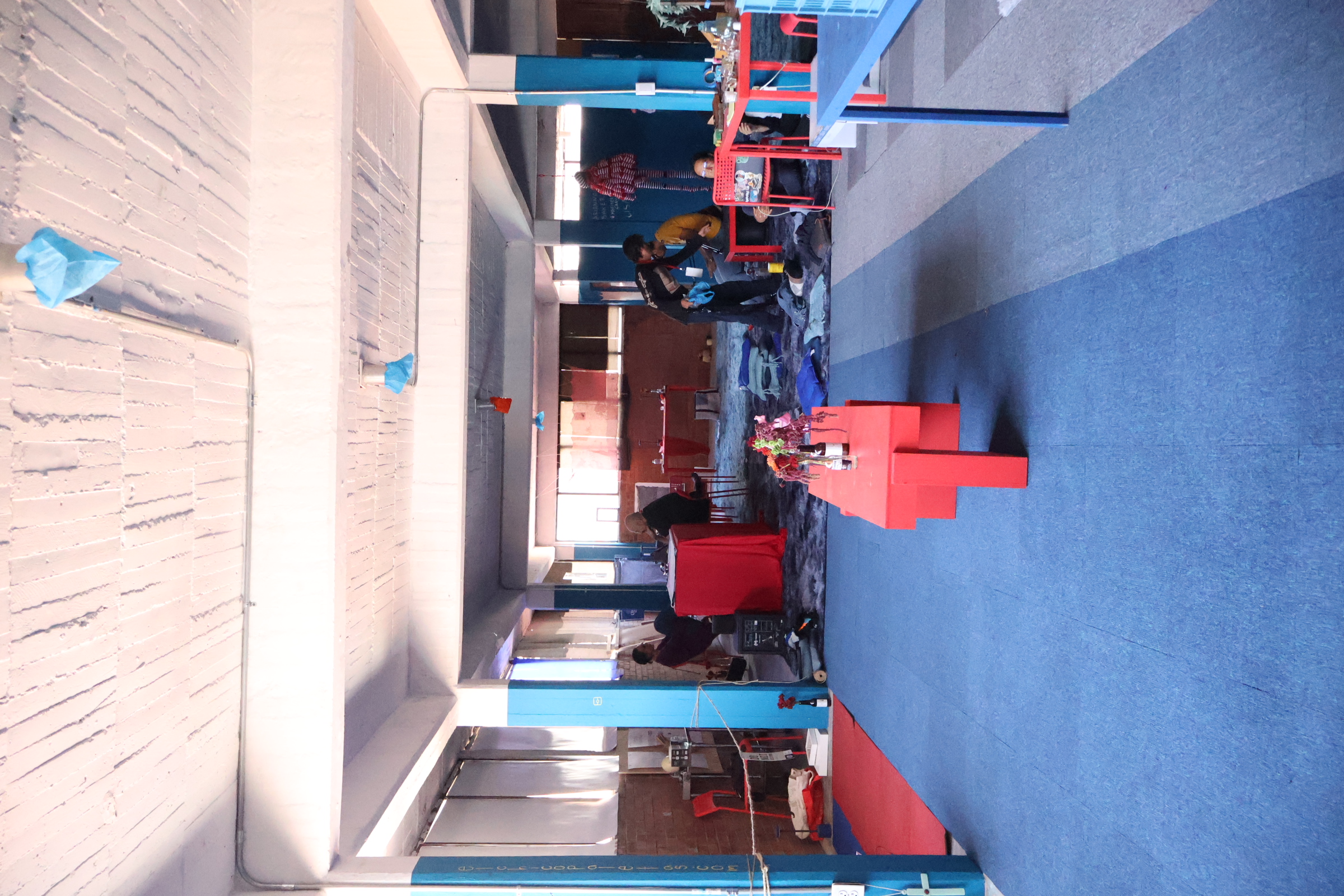
Professionalizing Art with a Local Perspective and a Global Vision: A Conversation with Diego Ascencio, director of PALMA
In conversation with Orbita Art Magazine, Diego Ascencio, director of PALMA, reflects on the professionalization of the careers of artists from Guadalajara, Mexico and Latin America, the qualities of artistic production in Mexico, the role of specialized media and the relationship between gallery and artist, necessary for a living art scene. The transcript was slightly modified to make it easier to read and clearly communicate the ideas discussed.
.jpg)
O: Hello Diego! Thank you so much for being here. I think I was telling you about it when we were scheduling the interview, but I love the PALMA project and I would just like to start the interview by asking you where the project came from and what makes the gallery unique.
DA: PALMA started in August last year, a year and a half ago. It begins with the objective of professionalizing everything that art involves. From working with artists to how to manage a gallery. I previously directed an exhibition space and then I had the opportunity to direct the gallery as such and I started from scratch, I think that's also very important. There are two partners who own the gallery and I act as director, but between the three of us we put together the name and the idea in general. It has been a year and a half of experimenting to get to where we are right now. Starting with a group of artists, a path and a few ways of working, we now have four artists represented, which means that we have a long-term relationship. We practically become partners with the artist and the gallery, we are on a joint project, and with the idea of adding a couple more artists represented next year and starting, or rather, continuing to believe in the project.
We currently have three showrooms, in this year and a half we have done 14 exhibitions, which is crazy. There were many projects that have been happening, this year it was necessary to do it this way because we are starting out and it was necessary for people to know who we are and that we are going for the long term, but next year we would like to slow down a little and we are going to focus on 3 blocks of 3 exhibitions and continue to seek participation in the fairs.
O: You mentioned that this relationship they have with artists is long-term. In that sense, what are they looking for in an artist for the management of the gallery?
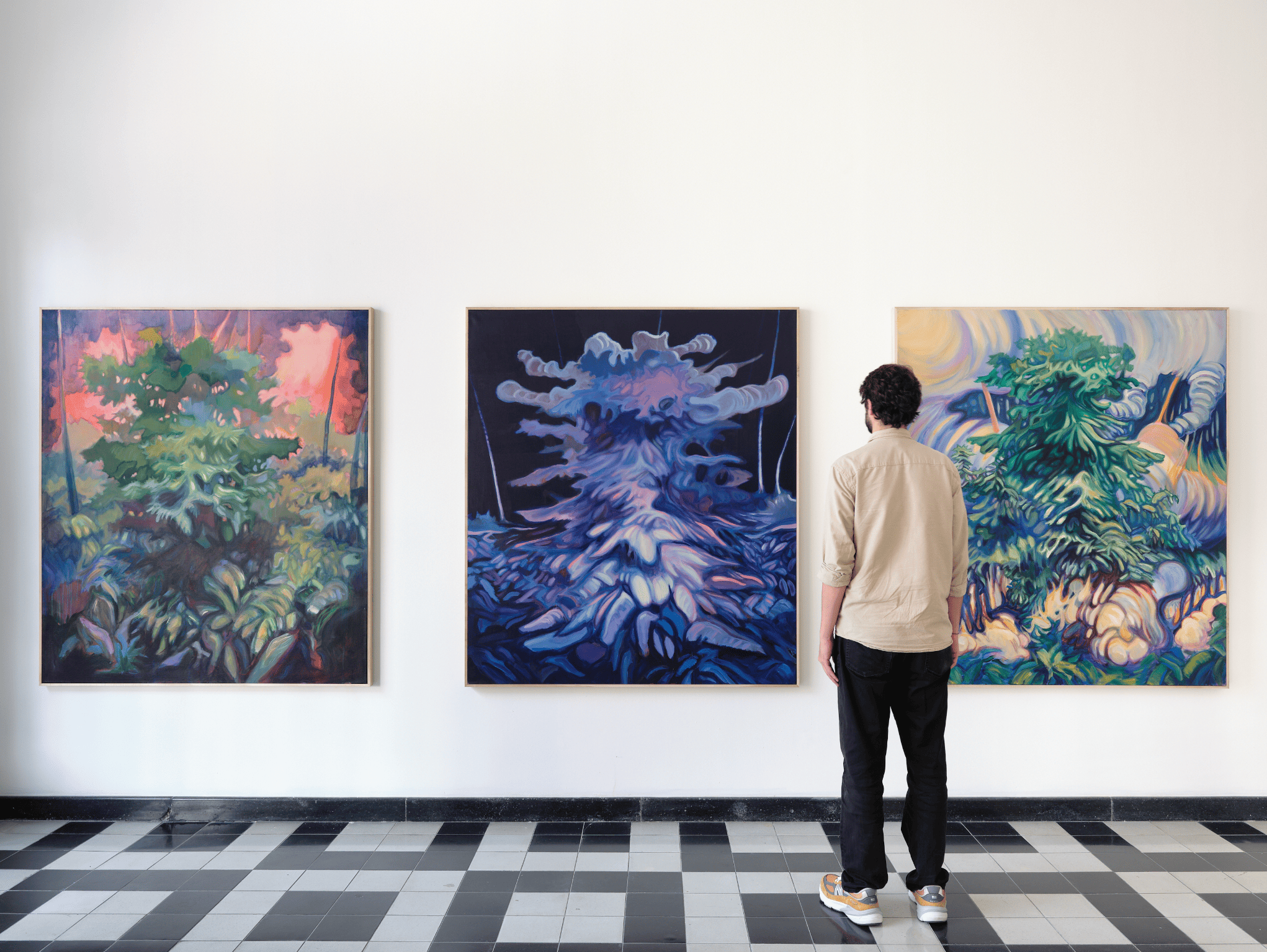
D: I'm going to use the word long-term again, because what artists do is long-term research. That what they are working on, what they are producing, researching, is a topic that gives a lot. We don't have a defined profile or line. We are primarily interested in working with artists from Guadalajara, Mexico, or Latin American artists. That's our only line, so to speak. We are now working with four artists, Ana Paula Santana, Julieta Beltrán Lazo, Napoleón Aguilera and Raúl Rebolledo. Their practices are completely different from one to the other, I think that is something that makes it even more interesting because there are many fronts that we can attack on one of them. Ana Paula is an artist who is more interested in sound exploration, Julieta is a painter, Napoleon works sculpture together with artisans, Raúl researches issues related to violence in Mexico. They are very different lines between one and the other, but that is what enriches, the dialogue they generate on stage.
O: How are these long-term investigations carried out? I understand that there are artistic residencies, exhibitions, how is the program planned?
DA: Everyone has their own way of working. For example, Ana Paula is very academic and now has the support of the National Art Support System. The National System gives you support for three years, so it's a project that develops for at least that period of time. You have to apply with a more or less armed project, so she has been thinking about and developing this project for several years. On the other hand, Julieta has just finished her master's degree at the Art Institute of Chicago. When I met her, her work was very different, I like to say that Julieta used to be a painter who studied at the Rhode Island School of Design, and when she got her master's degree she started out as an artist. I noticed a huge change in his work. Raúl has been working on the issue of violence in Mexico for many years from different fronts. He asks himself the question why talk about violence in a country where violence is talked about all the time? But what his work is trying to turn it around, rather than a violent topic, it is a hopeful topic for him, even if things happen, there is still light at the end of the tunnel. And Napoleon's work is this research between pop culture and traditional elements, mixing a bit of a culture of drug trafficking that is something very current today, but always with a critical and humorous commentary as well. Well, well, they are all subjects and research that need scholarships and support, because artistic production is not something simple, nor is it cheap, and we as a gallery support them on this path, but also the more we support artists, the more they can develop.
O: Sure. You mentioned that you prioritize artists from Guadalajara, then in Mexico and Latin America. Is the interest in the topics also around Spanish-speaking, Latin American narratives, or would you say it's broader?
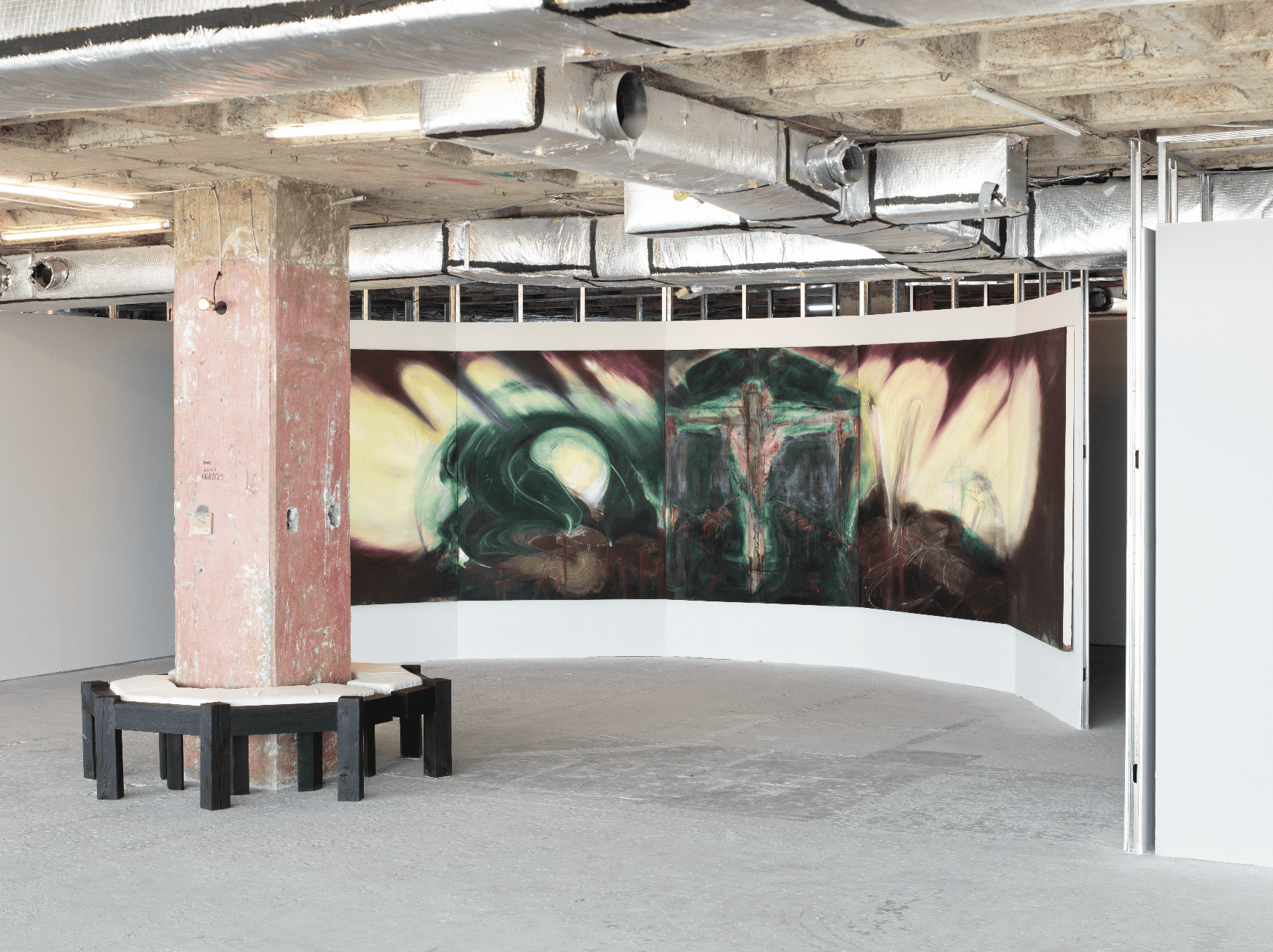
DA: More than interest in these subjects, interest is in people. It interests me, first of all they are artists from Guadalajara because they are artists that I know and consider my friends. I went in parts because the four of them are from Guadalajara, but for example, two exhibitions before this one, we worked with Cosa Rapozo. She comes from Mexico City, well she's from Hidalgo but she lives in Mexico City. This exhibition (referring to the room where the interview is taking place) is by Andrea Ferrero, a Peruvian artist who lives in Mexico City. That's why it's leaving Mexico, all of Latin America. The interest is because, well, I think that if I like them that they are people of a level who work in Guadalajara and Mexico City, and that we have had these approaches to their work. First it's their work, and then it's them as artists and people. What interests me is that apart from the fact that your lines of research are something that moves me, human relationships are very important to me. In the end I'm working with friends, that's something super important. Of course, making it very clear that it is one thing for us to be friends and another thing is the working relationship between gallery and artist, but I think that to a certain extent it facilitates this communication that does not have to be so rigid between institution and artist.
O: Speaking of these more human relationships, how do you think art, the art that is produced in Mexico by Mexican or Latin American artists, is perceived differently, in contrast to how it might be perceived in Miami, for example, or other fairs?
DA: From the outset, the profession or the way of producing is very different. I think it's important that Guadalajara is a center for workshops and artisanal production, we have from Tonalá, Tlaquepaque, we have the great advantage that we have the José Noé Suro factory, where artists from all over the world come to produce ceramics with him. For example, unlike Mexico City in Guadalajara, there is a lot of space, artists' spaces tend to be much larger than in Mexico City or unlike those in New York, for example. Or you have the possibility of getting a winery in Chelsea or Brooklyn, but the reality of many artists of this generation is that they live and work in one place, one on top of the other. You can tell the way people produce in Guadalajara, that there is all this space and all this relationship with workshops.
O: It's curious because in forums such as the ForA, Material Station, the relationship with Mexico City always comes up in talks. But I think that Guadalajara has, as you say, this relationship with artisanal production and beyond craftsmanship.
DA: Yes, obviously there's always going to be this comparison with Mexico City. Mexico City has an impressive scene of contemporary art galleries and museums in Mexico City. 30 galleries come to mind when in Guadalajara maybe 5 or 6. Let's not say museums, Tamayo, Carrillo Gil, Jumex, etc., and here we have the MAZ, MURA and MUSA, which don't go 100% with contemporary art, the programs are divided between different types of art. So always, there's going to be this comparison between Guadalajara and Mexico City. Even Monterrey is getting into the conversation a little, especially since they have the MARCO Museum, which is one of the most important in the country, but something that seems very characteristic to me is that the artists from Guadalajara stay in Guadalajara. We can think of the artists who are already very high up, for example José Dávila, Jorge Méndez Blake, Gonzalo Lebrija, all of whom have their studios in Guadalajara. Being able to have their studies anywhere in the world and working with galleries outside of Mexico, they could well have their studies in Paris, New York, anywhere; but they decide to stay in Guadalajara. I think that speaks highly of the city and the art scene as such because I think it's a very peculiar characteristic. Why are they here? The space, the production workshops, because they are studios that have many collaborators, so all those collaborators are part of the next generation of artists. They are young artists working in established artists' studios that help the next generation to grow, I think that's very important.
O: And we saw it with Material Station, right? There were collectors who flew to Guadalajara, paid for their hotel, their plane, and were here to see art in Guadalajara, regardless of a fair or other event in Mexico City.
DA: Yes, I think that as I tell you Guadalajara isn't turning back, it's already part of the conversation. El pre Maco has been going on for years. Everyone before going to Mexico City to Zona Maco comes to Guadalajara a week before going to Mexico City and all the studios, every inauguration is a week with a lot of events and a lot of people. What Material is doing is not letting anything else be art week in February but having another week in September. And again, why Guadalajara? Why did Material choose to come to Guadalajara? It's their fourth or fifth edition, but they come back, come back, and come back. Every time the forum is getting bigger and there are more spaces happening around it, since last year the ACME Hall was joined by an initiative that was not at the MAZ, this year it was in another venue. More things are happening around, we have two art weeks in the city, something has to tell you that everything is fine in Guadalajara.
O: Of course, at the beginning you mentioned the need to professionalize; to professionalize artists, their work. Returning to that with the global aspect, and the attention that there is in Mexico. We already have several decades with fairs such as Zona Maco, events, and producing world-class artistic talent. But I think that in recent years it has been kind of fashionable to come to Mexico and come and set up your studio in Mexico. This coincides with the year and a half that PALMA has been open to the public. How have you experienced this wave?
DA: Look, one of the objectives of why we did PALMA was that we felt that the city needed such a space. We have galleries like Curro, Travesia Cuatro, which have been in Guadalajara all their lives, other younger galleries, others that came and went and you no longer know what's going on with them. But above all, there are many artists who do not have a space or a representation as such of a gallery. A lot of things that happen in Guadalajara are done by the artists themselves, who I think is also something that has kept the art scene very vibrant. So we think that this gallery was needed to focus on younger artists and to a certain extent I think we give them the opportunity to experiment and do things that in other spaces they would not have been able to do, either due to lack of budget or lack of physical space. What PALMA is here to do is to take a place that no one had taken, which is this part, as I said, more experimental, or riskier, and that's why I mentioned the idea of professionalizing it. We want to give it an approach wherever it is from Guadalajara to the outside, so that people can see that what is happening in Guadalajara is well done, is well armed, and that it is worth looking at. I know many collectors who don't buy from artists if they don't work with a gallery because they feel that the gallery supports the artist and the collector. So that's why I think it was important that it be a space that looked well put together. From the way we set up the exhibitions, from the way we communicate, the way we sell. All very, I will not say bureaucratic, but they are processes to be followed that support the artistic profession.
O: And how do you think this process of professionalization contrasts with the culture of improvisation that we have in Mexico? Especially with production workshops, craftsmen, freight?
DA: I mean I think that's part of Mexico and I think it's very important to be able to resolve. Of course I would love for everything to go as planned. And it never happens, it's never going to happen even if you try. So we have to know how to deal with any situation that comes our way, since the assembly, we ran out of time and there is a piece that won't come out on time, or that if the freight arrived late, you can keep thinking about what you could have done to stop it from turning out like that, or you can start improvising and resolving the situation. I think that is a fundamental part of the training of an artist. Know how to do something at that moment, with what you have.

.jpg)