De lo camaleónico y otras bestias

Manuel Pidal opens his first solo exhibition “On the Chameleon and Other Beasts” with Multipurpose Projects

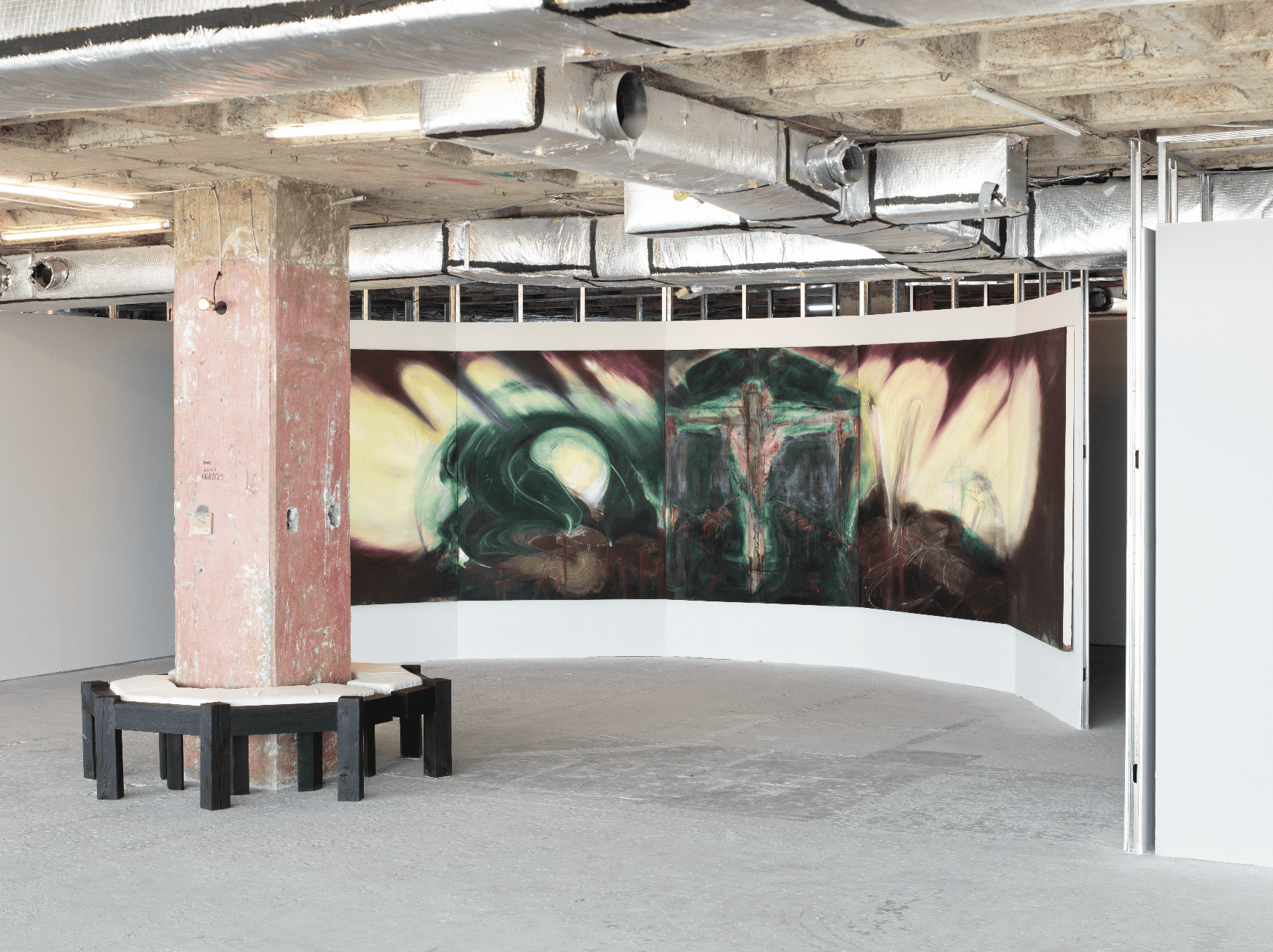
La Capilla Teofágica, 2026. Oil and oil pencils on canvas (5) 180 x 150 cm. Courtesy of the artist.

De lo Camaleónico y Otras Bestias by Manuel Pidal, is the artist's first solo exhibition to be presented at Multipurpose Projects during Art Week 2026, with the curatorial support of Sandra Sánchez and museography by Sergio de la Garza. Through a selection of nine works, the exhibition explores three central themes: Theophagy (the ritual act of consuming the body or essence of a deity, understood here through a material and light study), the Chameleonic nature(strategy of camouflage and predation), and the paradigms of faith, specifically in critique of the colonial context.

The artist contrasts the gods and symbolic representations described in the Bible with their assimilation into Mexican culture, presenting them as equals and politicizing them based on artistic and material research. From the exhibition, two elements stand out with which the Christian and Mexica religions approach each other: the serpent (a creeping animal that in the Bible is cunning but unclean) - representative of the “non-Christian”. and temptation, whereas in Mesoamerican cultures it is a symbol of wisdom, abundance, renewal and fertility) and lightning (symbol of the Apocalypse, destruction, new horizons or renewal). The artist develops a pictorial method composed of layers and glazes, associating the different characters to a specific technique and materials. For example, wave and rhythmic gestures imitate snake scales, the use of black pigments and strategic use of light refraction refer to Theophagy colonial, to the digestion of symbols.
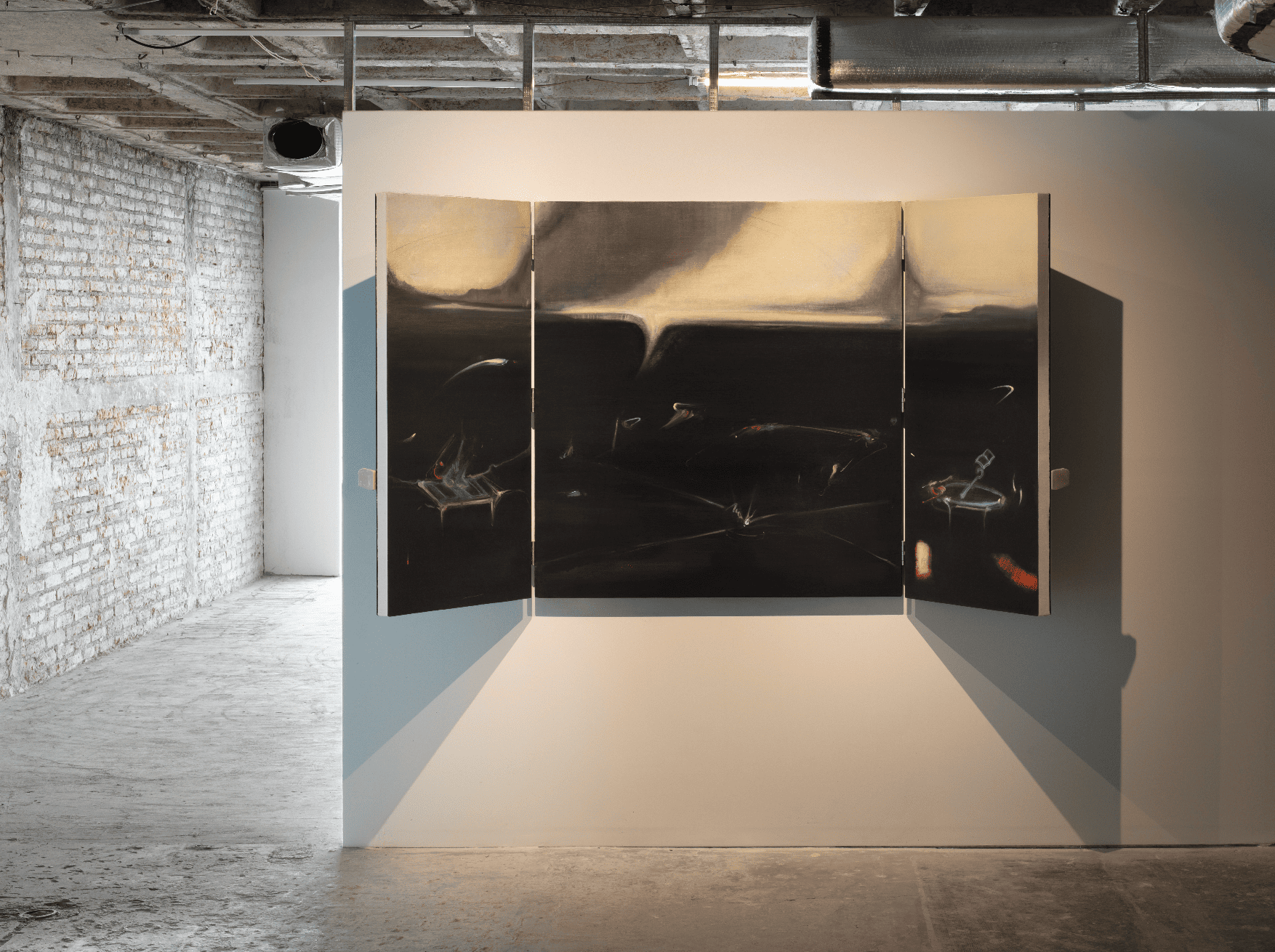
Las Tentaciones de San Antonio, 2026. Oil and oil pencils on canvas 130 x 240 cm. Courtesy of the artist.

At the center of the exhibition is La Capilla Teofagica, composed of five large format pieces. In it, the Coatlicue or “the one with the skirt of snakes”, the Mexican goddess of the earth, devours the crucified Christ, acting as a metaphor for the cannibalism of the colonial era and from which a new identity emerges. Talking here about the prey that survives the predator by camouflaging the rules of its environment is useful for understanding the mutant and malleable nature of Latin Christianity, whose gods, rather than being static idols of order and purity, manifest a changing identity that, having survived the predator of the Colony, is still understanding itself. The chameleonic is proposed as a tool for understanding the visual references of the Christian faith not as prescriptive symbols, but as archetypes of an identity that is transformed based on the understanding of the religious paradigm. In the artist's words: “I refuse to reconcile gods. This is not a burr painting of the Vasconcelism.”

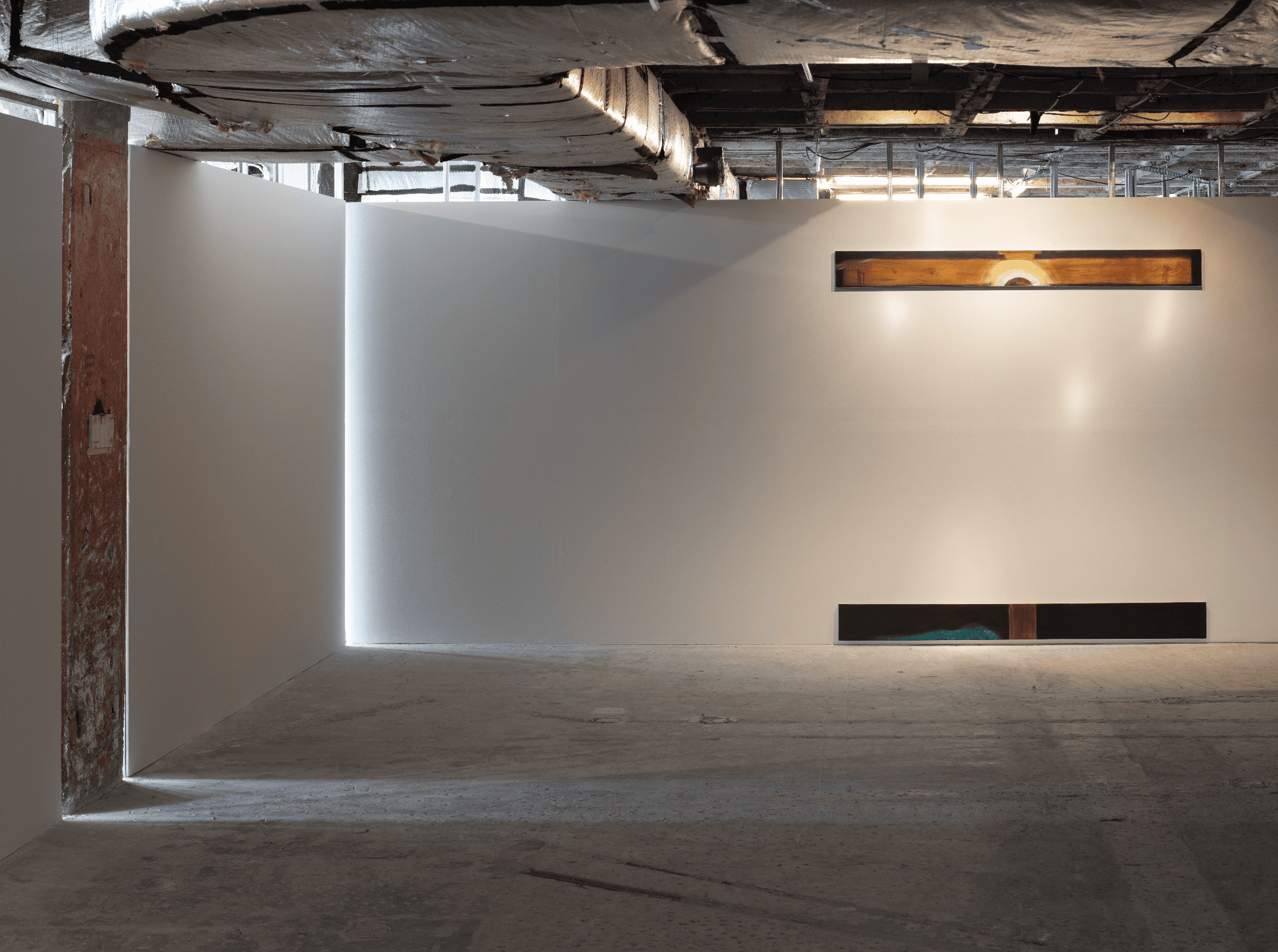
Another key piece (and one of Orbita Art Magazine's favorites) is Las Tentaciones de San Antonio. The piece can be closed or opened, showing a desert (or apocalyptic) scene where lightning is interpreted as an agent of rupture and chaos on Earth. The artist uses fine lines, light and translucent colors in contrast with dark-hued glazes to suggest events in the landscape. On the right and in dialogue with Las Tentaciones de San Antonio meets La Caída, a series of two canvases that suggest a Christ about to fall from the Cross, with a space of about 160 cm replicating the known height of Jesus. At the feet of Jesus, part of a snake's back is suggested. Could this snake be the new horizon beyond the Apocalypse? The “new world” where snakes, instead of symbols of evil, are deities? Playing with the difference in dimensions, symbolism, layers and museography, the spectator is invited to explore the exhibition in a unique way, allowing their own interpretation of the symbols present in the work.

The fall, 2026. Oil on canvas (2) 20 x 200 cm

Above all, the artist proposes an understanding of modern religion where there is no assimilation of idols or absolute truths of faith but rather a constant encounter between symbolic forces, based on references such as The Swan no. 14 by Hilma Af Klint and Nuestros Dioses by Saturnino Herrán. Manuel Pidal builds with his work a plastic language that invites us to understand culture Latin-Christian from curiosity, without judgments or idealizations.

De lo Camaleónico y Otras Bestias is currently on display and can be visited until April 2026 at Paseo de la Reforma 404, floor number 14 with official identification. Visiting hours are from Wednesday to Friday from 12:00 to 18:00 and Saturday from 12:00 to 16:00 h.

Get your daily dose of theory on design, art and tech—directly to your inbox.

Subscribe to our newsletter to receive The Orbiter, our monthly digest of what's new in the creative and inventive landscape.