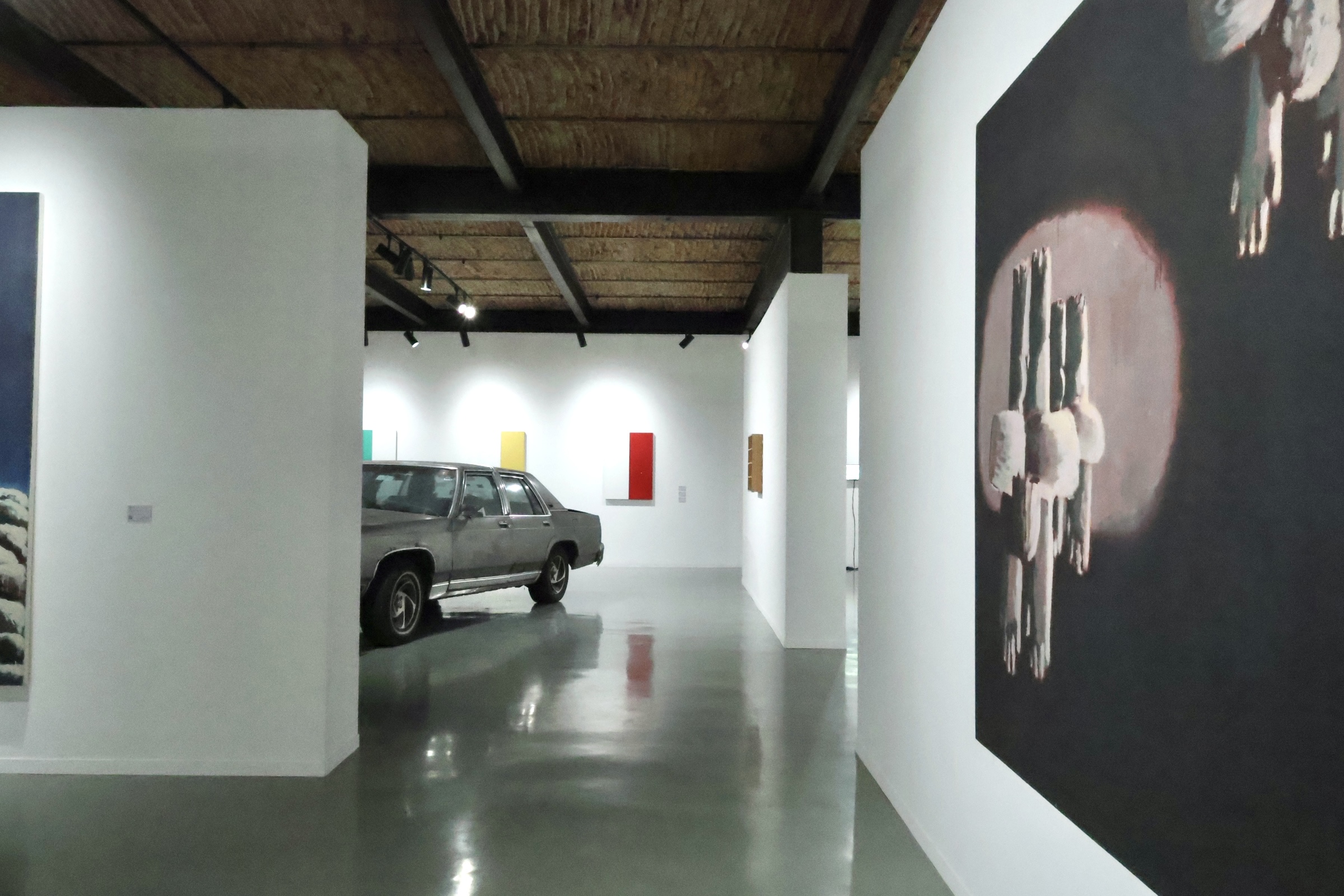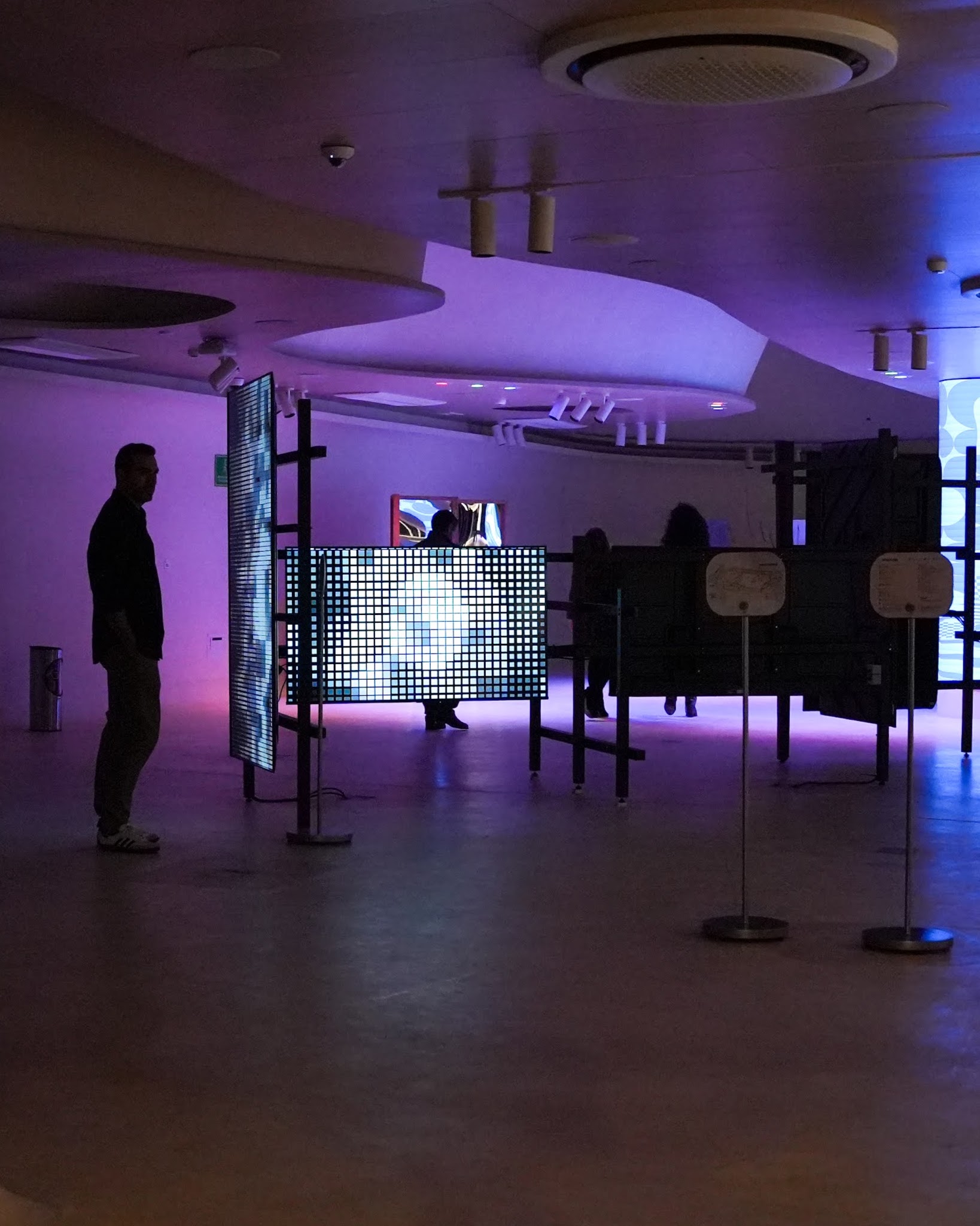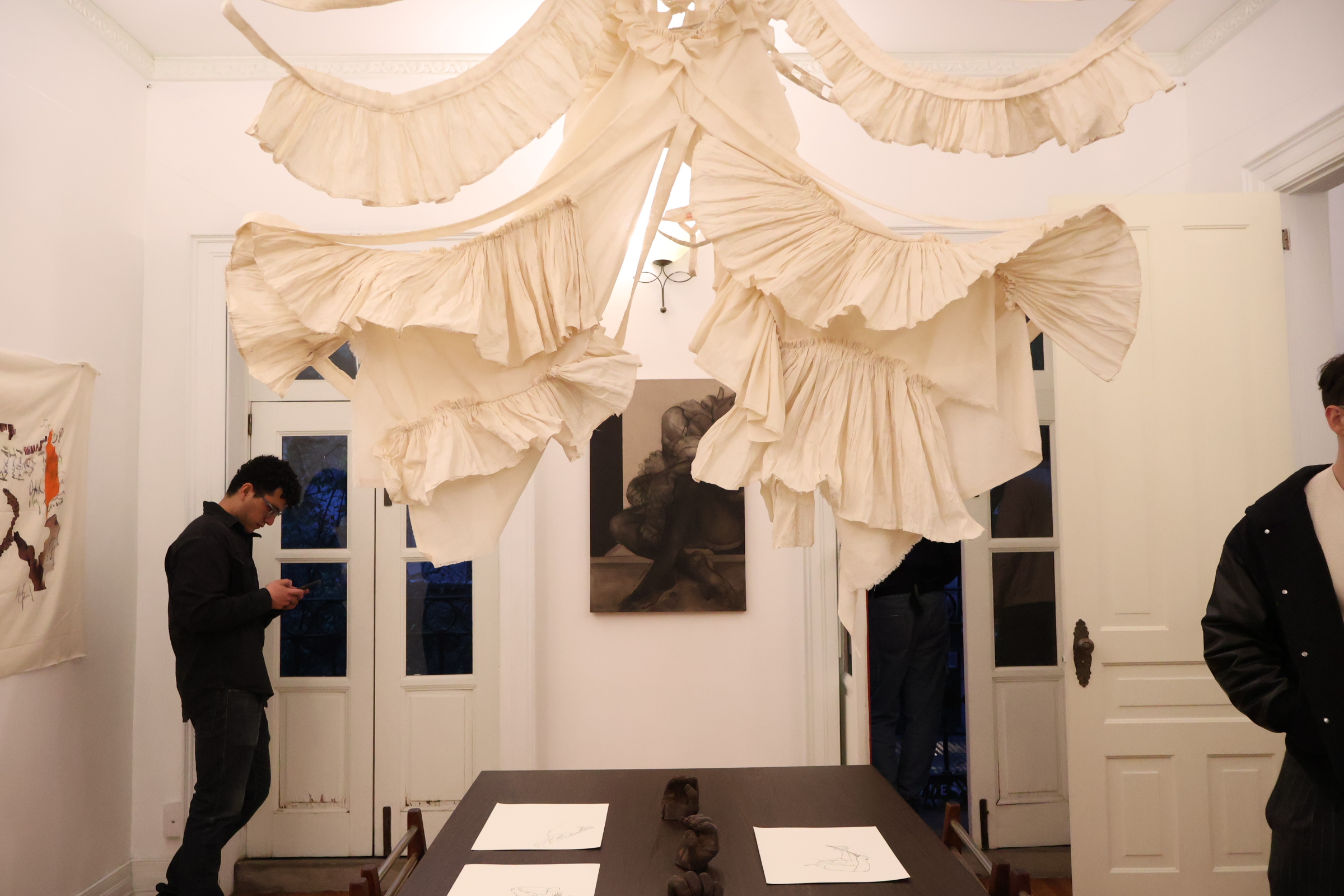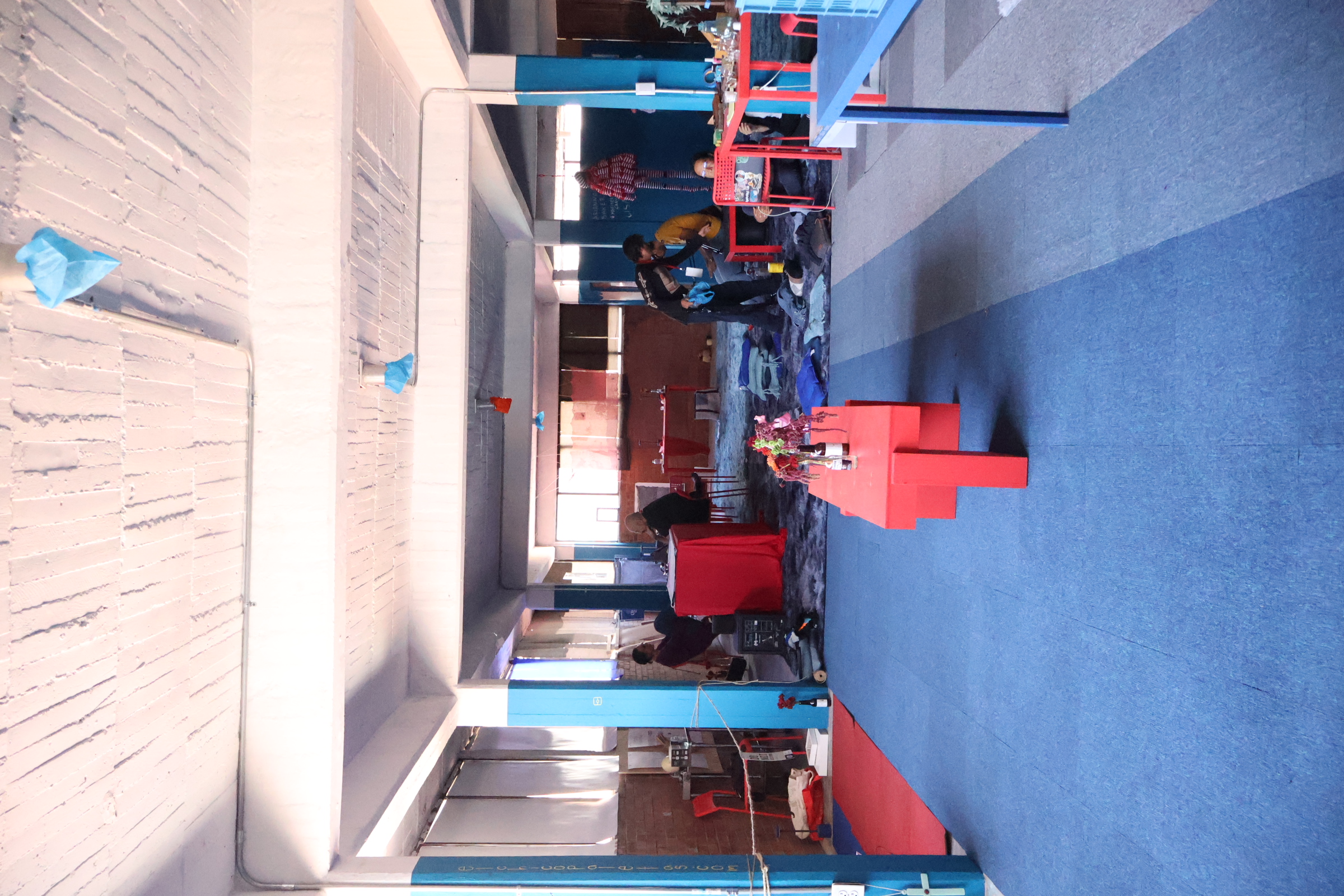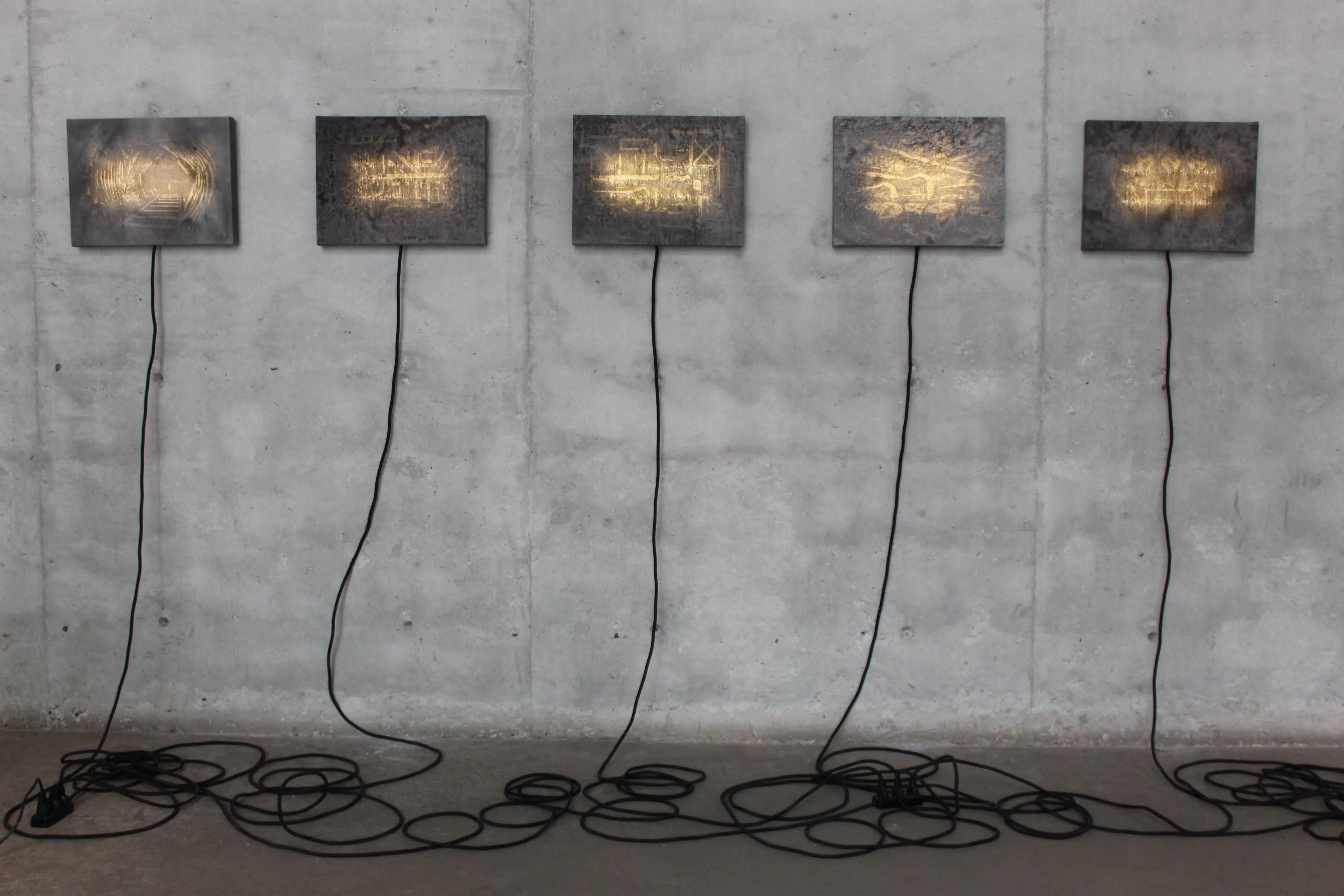
Perla Mata Chairez, Estado Post-Trauma (2026). Installation view. Photo by Mariana Vinalay courtesy from Fundación Casa Wabi
Perla Mata Chairez uses these residues that, as she puts it, "escape" from the industrial perimeter to paint imaginary scenes that give shape to those parts of industry that remain hidden from the general public. Everything that happens "behind" the machinery, the walls that protect the complex, and concealed processes comes to life within this exhibition space. The installation is composed of six lightboxes with paintings, a medical screen, a canvas of approximately one square meter in surface area, and a central sculpture that we would describe as the "heart" that "pumps" metallurgical residues in liquid form to different points throughout the room.
Inspired by Deleuze and Guattari's theories of "panmetallism," which describe the presence of metals everywhere — from water and plants to the salts and minerals that pass through bodies — the residues used in Mata's work represent the "trauma" that industry inflicts on materials when working them, for example by striking a rock or polishing it, but above all by discarding them. Each of the paintings on the lightboxes is worked on both the reverse and the front, with the aim of initially presenting an abstract composition. The light switches on and off intermittently, so that when illuminated, it reveals a moment the artist imagines takes place inside the factories — a scene that was previously invisible to the viewer.
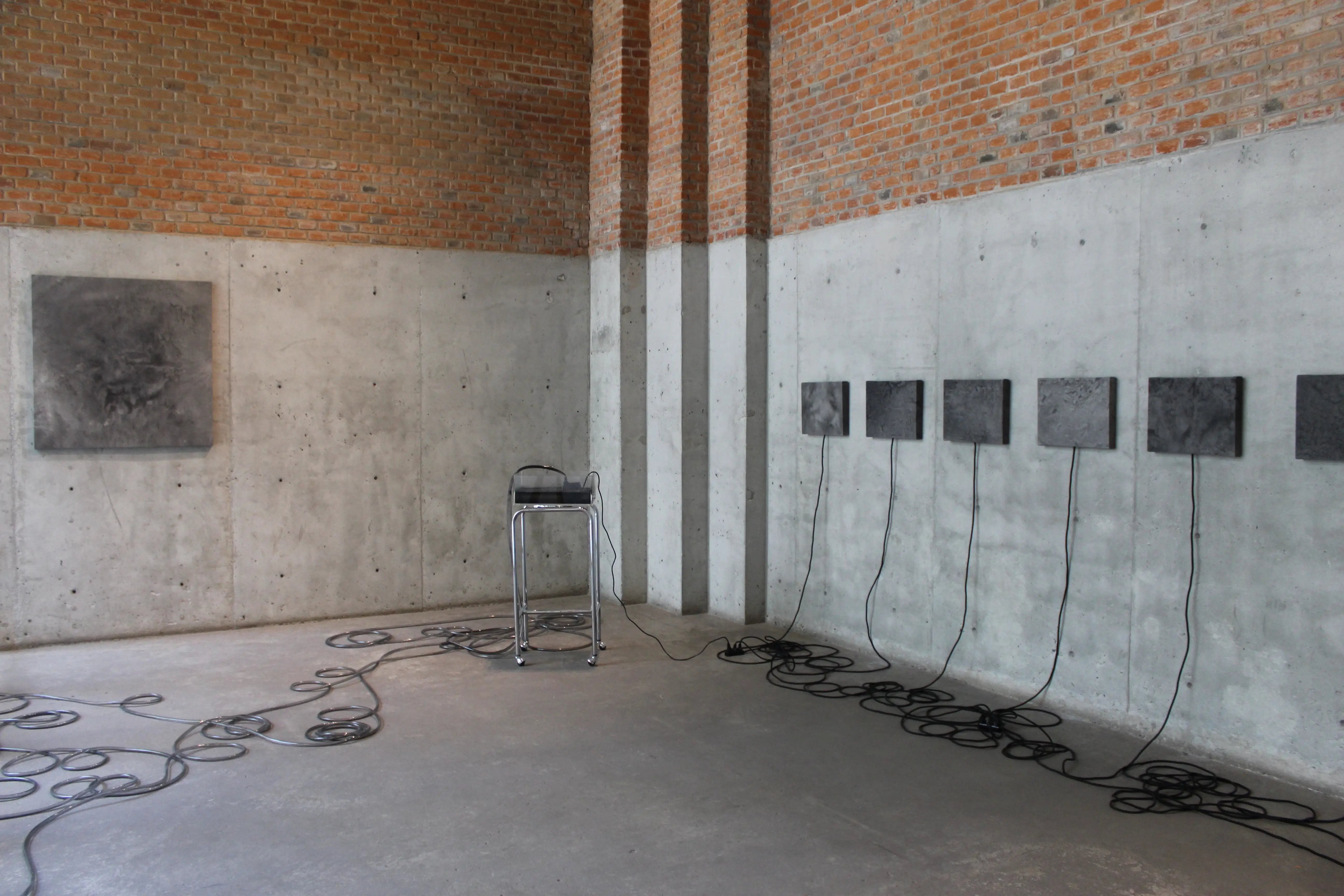
Perla Mata Chairez, Estado Post-Trauma (2026). Installation view. Photo by Mariana Vinalay courtesy from Fundación Casa Wabi
The residues discarded by the industrial complex are of particular interest to Mata for their artistic potential, which she considers underexploited. "I really liked the idea of thinking that there is a body behind it — this idea that desirable parts of the material are separated and selected, while other parts are discarded and left in a state of trauma, as if the remaining matter were left in a post-operative state." For the artist and the exhibition's curator, Andrea Bustillos Duhart, the dialogue with the exhibition space was crucial to amplifying the concept of the installation. Estado Post-Trauma reflects on the capacity of material to "overflow" the place in which it is contained; the hoses that "pump" residues in and out of the room are an effective metaphor for representing the transformation of matter as it passes through industry, and the "post-trauma" state that remains in the material even once it has been discarded. Just as with industry, we tend to think of metals as fixed, solid, immovable materials — though in reality, like all matter, they have the capacity to transform and to transform the environment around them.
-
This is the last week to visit Estado Post-Trauma and the simultaneous exhibition Sentimientos Viscosos by Pablo Arellano, on until July 5, 2026, at Fundación Casa Wabi at its Calle Sabino 336 location. For more information, visit the Foundation's official website at https://casawabi.org/exhibiciones/sabino/.

.jpg)