%20El%20fondo%20del%20aire%2C%20Courtasy%20Toast%20Project%2C%20Ph%20Leonardo%20Morfini.webp)
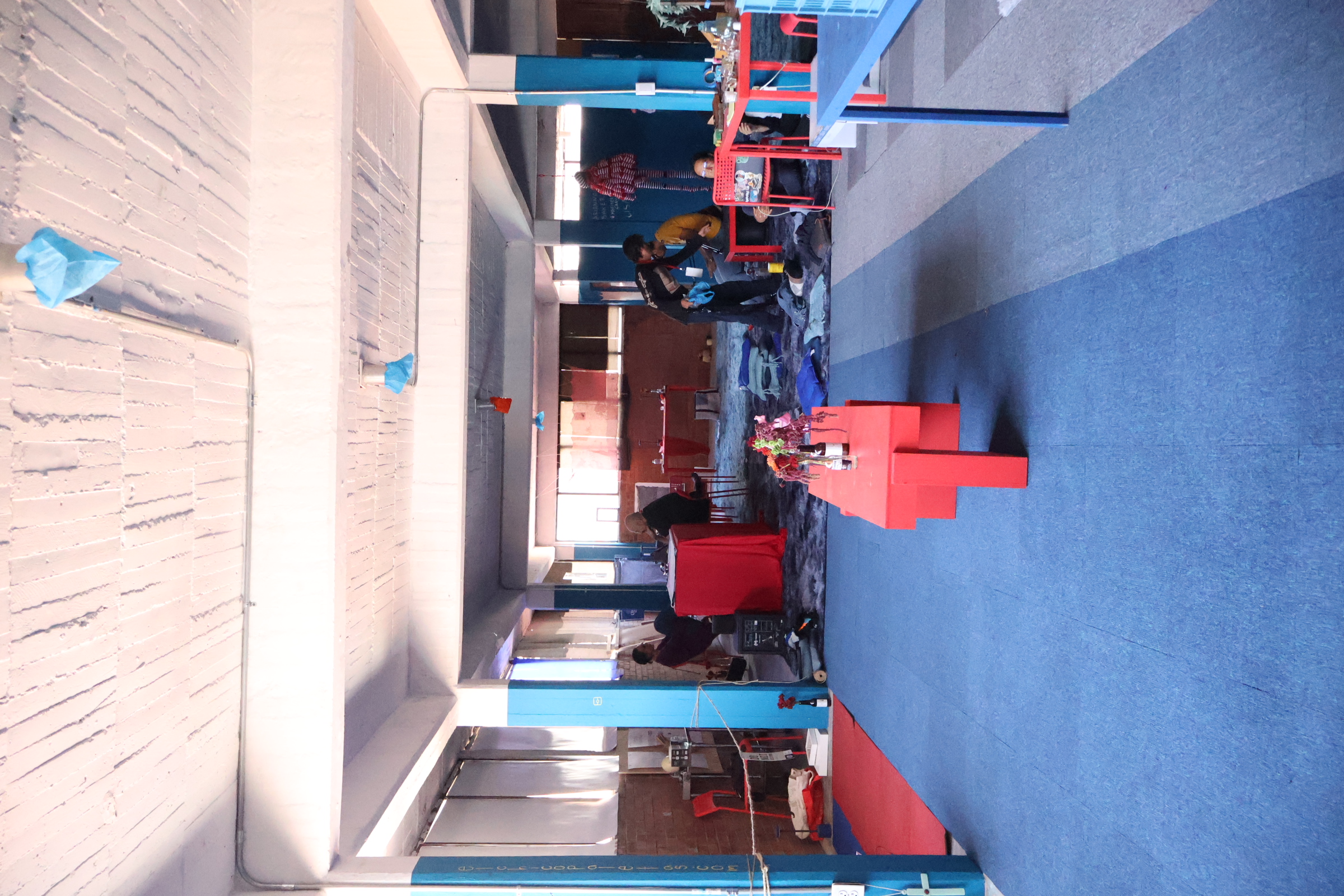
El fondo del aire (2026) by Manuela García, installation view. Photo courtesy of Toast Project Space, credits Leonardo Morfini
The practices of Manuela García and Giuseppe De Mattia explore, respectively, the interactions between our body and spaces, and ways in which the past can connect with the present, using irony to speak about art and memory. García proposes, through her work, that what we recognize as space, and which therefore governs our interactions with and within it, is simply a configuration of predetermined perceptual habits, habits that can come into conflict as soon as symbols and patterns present themselves contradictorily. The pyramid, without much thought, evokes the past—the monumentality of our cities and the immovability of our built spaces—while the translucent, seemingly lightweight plastic recalls the light immediacy of our era. For his part, Concretizio Romero is a tragicomic character who inhabits this pyramid in deep concentration—though for no apparent reason—emitting from his head a smoke that smells of rosemary.
The encounter of these two practices results in an interesting reflection: how can a space affect the relationship between "form" and "idea"? One interpretation we could make of this formulation is that between form (matter, the fact) and idea (the potential of matter or the potential of the fact) there exists an abysmal bridge, and that there are thousands of ways in which form can come to be concretized into an idea. The choice of the color red for the pyramid is not accidental; red is chosen as the most intense color that most aptly conceptually represents intellectual fulguration or autonomous fire. Red, as autonomous fire, in turn represents the intense motivation to construct ideas, even though not all of them come to be realized. In the words of Georges Didi-Huberman: "How can we forget that the bottom of our body is red? That blood, its vital principle, is also its atmosphere?”
%20El%20fondo%20del%20aire%2C%20Courtasy%20Toast%20Project%2C%20Ph%20Leonardo%20Morfini.webp)
El fondo del aire (2026) by Manuela García, installation view. Photo courtesy of Toast Project Space, credits Leonardo Morfini
This dual intervention by the artists is an instant in which the immateriality of García's work lands in the concreteness with which De Mattia translates processes of memory and tradition into modernity. Together, they are an instant in which we seem able to observe ourselves, concentrated on imagining other possible worlds. In the words of the exhibition's curators, Vasco Forconi and Marco Valtierra, "only in imagination does the idea of the endless fit.”
-
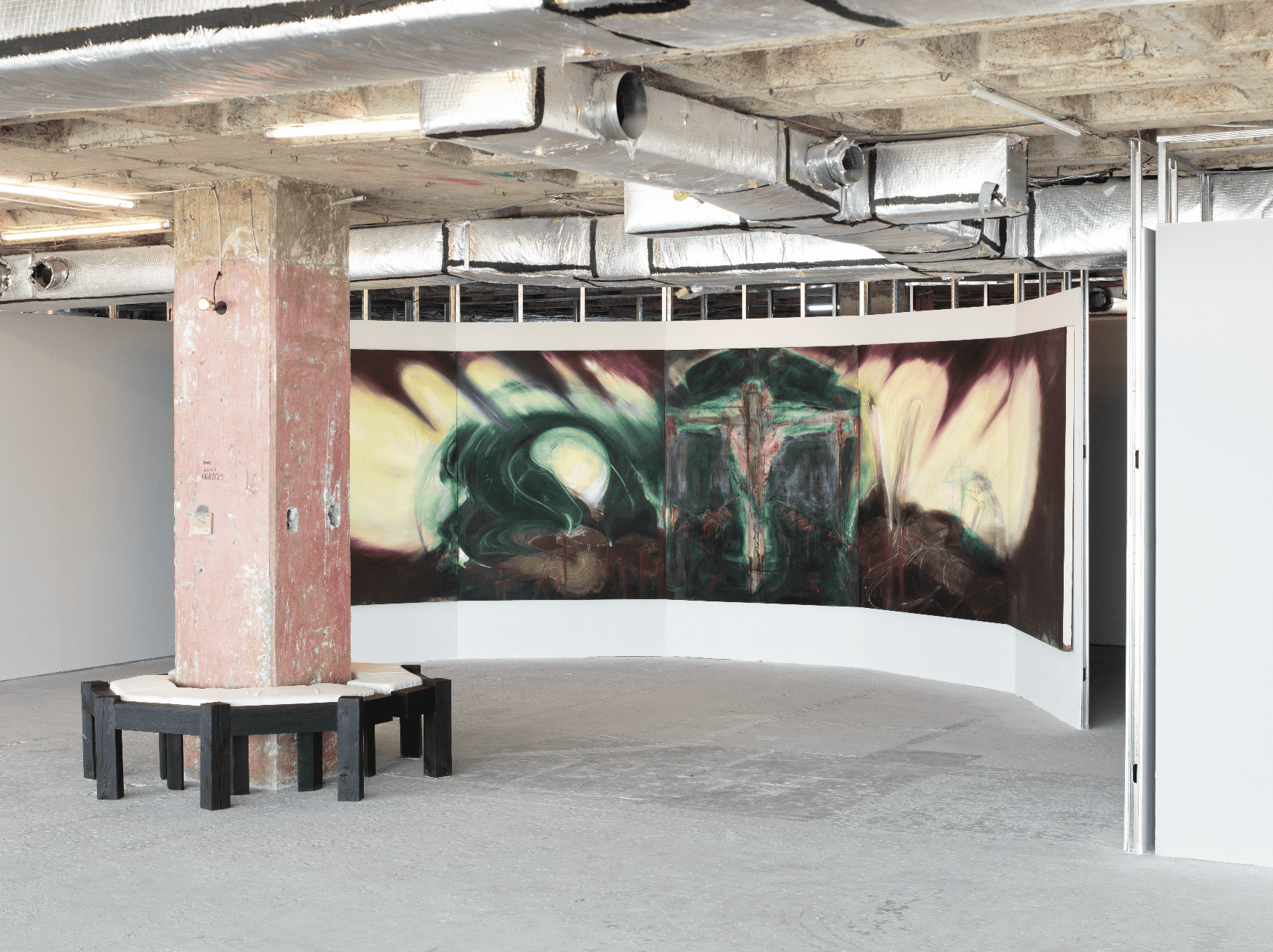
The exhibition activates an exchange between Toast Project Space, Florence, Italy, and Espacio Cabeza, Guadalajara, Mexico, through two new productions by Manuela García (Mexico City, 1982) and Giuseppe De Mattia (Bari, 1980). The project arises from a choral conversation between artists and curators that, starting from expectations about the real, leads to a reflection on imagination, processes of cultural translation, and the various imaginaries of the South between the Mediterranean and Latin America.
In fall 2026, the project will continue at Espacio Cabeza, in Guadalajara, with a second chapter of the exhibition, which will host a new production by Giuseppe De Mattia in dialogue with an intervention by Manuela García.

%20El%20fondo%20del%20aire%2C%20Courtasy%20Toast%20Project%2C%20Ph%20Leonardo%20Morfini2_DSC_0109_Ph%20Leonardo%20Morfini.webp)
.jpg)