Two Years of Claroscuro: The Gallery That Found Its Identity in Photography
Over these two years, Claroscuro has grown from a small, fledgling project into a gallery with its own identity within the photography community, taking on greater responsibilities as it expands its presence in the art world.

Claroscuro is a Mexican-Bolivian gallery founded by Jeannette Arévalo Angus, who arrived in Mexico in 2018 along with her husband. The gallery's founder, who comes from the world of graphic design and was born in Mexico to Bolivian parents, felt motivated to come to her ancestral homeland in 2018 to connect with her culture of origin and a deep interest in connecting with the art world in Mexico City.
The gallery opened in 2024, marking a full two years this September. The project was born in a forty-square-meter space in the Roma neighborhood, a salon that functioned almost like a runway. There, the gallery operated for a period, mounting exhibitions every month without exception, allowing it to accumulate more than twenty shows in a short time. From the start, Claroscuro's distinguishing mark was supporting emerging artists while also building ties with already established and recognized artists in the field. As the project grew, the Roma space became too small, compounded by rising prices in the area.
This prompted a move to the south of the city, to the Colonia Florida in San Ángel, where the gallery settled into a house, allowing it to play with different rooms and projections. The reopening featured a double show: photographer Pepe Castillo and sculptor Héctor Alvarado, the latter's pieces later also exhibited at Hábitat Expo. Initially, the space remained open to different disciplines, painting, sculpture, and even performance, responding to public demand.
Over time, with a more consolidated identity, the gallery decided to specialize exclusively in photography. A key moment in this shift was the exhibition "Proyecto Análogo," a project by María Prieto and Pablo Íñigo Argüelles, two photographers from Puebla based in New York and trained at the ICP (International Center of Photography), who traveled specially to mount their show at the space. This exhibition marked a turning point for the gallery, not only for the contacts it generated, but because it opened the door to collaborations with renowned photographers such as Graciela Iturbide and Yvonne Venegas, among other names who have crossed borders. From then on, Claroscuro established itself as a gallery specializing in photography, maintaining its monthly exhibition schedule.
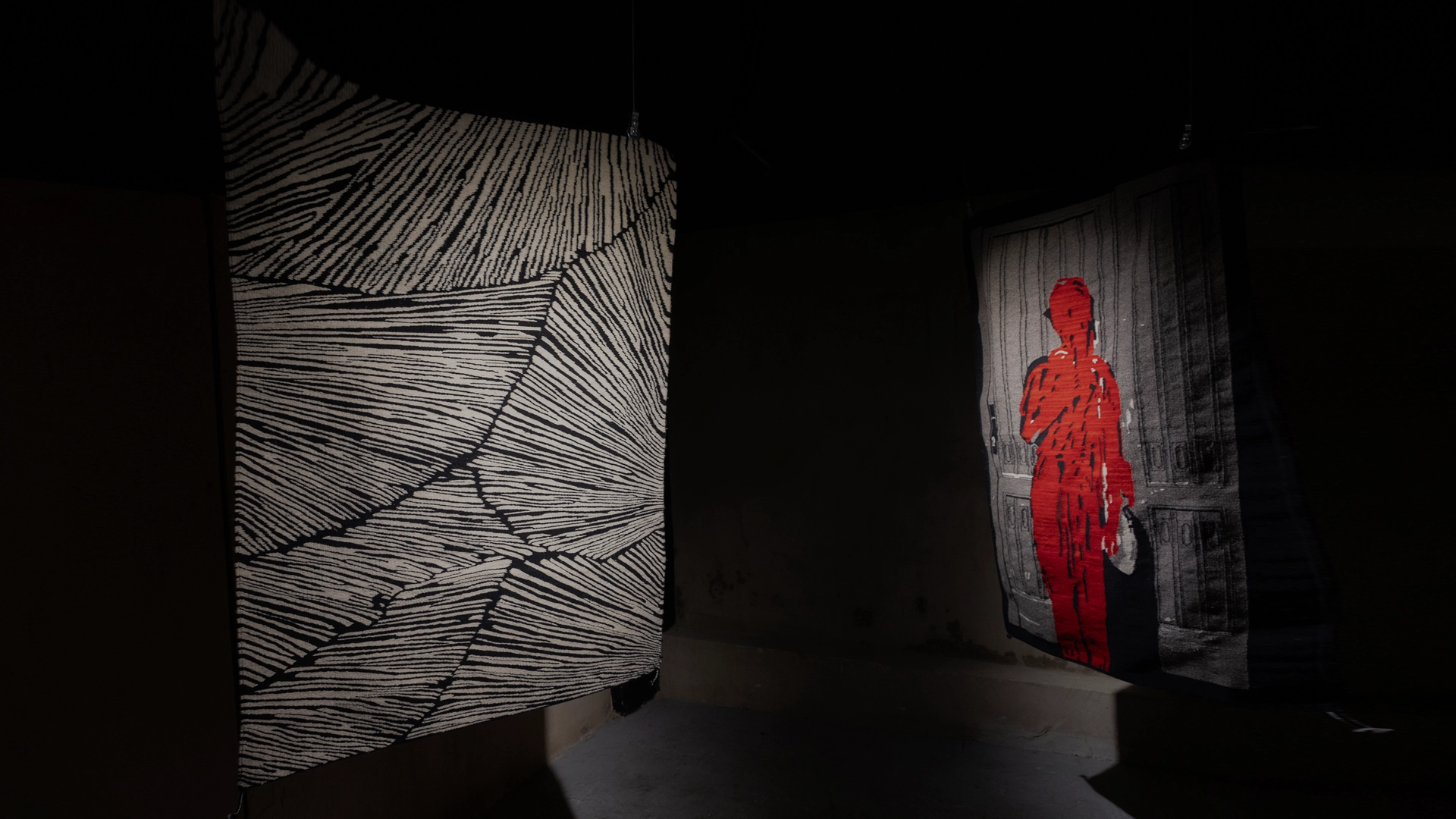
A pillar of the project has been making pieces accessible to the public. Not in terms of low price, but in the sense that collectors understand the real value of what they're acquiring: the background of the photographic project, the artist's essence and process, whether in analog or digital photography, often with the possibility that the artists themselves invite visitors to their studio.
This year, the gallery took part in Hábitat Expo, a fair that offers an alternative to conventional art circuits, with a specially curated proposal for its booth, aimed at an audience different from the usual core of collectors, including architecture firms and construction companies, interested in integrating art into their habitat and personal space, beyond mere decoration.
In April of this year, two months before the fair, the gallery presented a group exhibition of Mexican and Bolivian women photographers, which included Graciela Iturbide herself, something the founder describes as a dream come true and a personal achievement, having gotten Iturbide to agree to exhibit in Bolivia as well, her country of origin.
What do you like about Graciela Iturbide's photography?
What I love is that—it sounds very poetic, but—it says everything and not much at the same time. It doesn't need context, it doesn't need analysis; Graciela's photography doesn't need to be reinterpreted. I think she's, for me, a photographic poet. Someone with great sensitivity, but at the same time with a strength, like a warrior, perhaps because of the loss of her daughter. Although I don't think that's the reason she makes photography, I think she continues to create unique photography. Photography that, despite transcending time, remains obviously immortal, still impacting new generations. And something I like is that she keeps making photography even though she could simply live off selling her photographs; she always wants to give something more. So her photography speaks to who she is, both in front of and behind the camera.
How do you think Claroscuro gallery's vision tells the story of Latin America through photography?
I think understanding Latin culture from various points of view goes hand in hand with how I want to direct the gallery project. We speak Spanish, but it often doesn't always seem like the same language across the borders. However, there are things that unify us. For example, when we had the exhibition with a Bolivian photographer, she did a show with textiles from her region, which visitors easily identified as Mexican, for example, from Chiapas or Oaxaca. I'm interested in showing those similarities that connect Latin American countries, showing that the political division doesn't really exist.
—
Over these two years, Claroscuro has grown from a small, fledgling project into a gallery with its own identity within the photography community, taking on greater responsibilities as it expands its presence in the art world. With this growth, the Claroscuro gallery is evolving to carry its founder's name. The concept and essence of the project remain the same, but from now on the gallery will be called Jeannette Angus, marking a turning point in Claroscuro's trajectory.
Claroscuro gallery’s next exhibition, Sistemas Vivos by artist Olga Burkard, opens to the public on July 23rd 2026 and can be visited at its location in Florida, at the corner of Francia, Tecoyotitla 122, Álvaro Obregón, Mexico City.
%20El%20fondo%20del%20aire%2C%20Courtasy%20Toast%20Project%2C%20Ph%20Leonardo%20Morfini2_DSC_0109_Ph%20Leonardo%20Morfini.webp)
.jpg)
.webp)