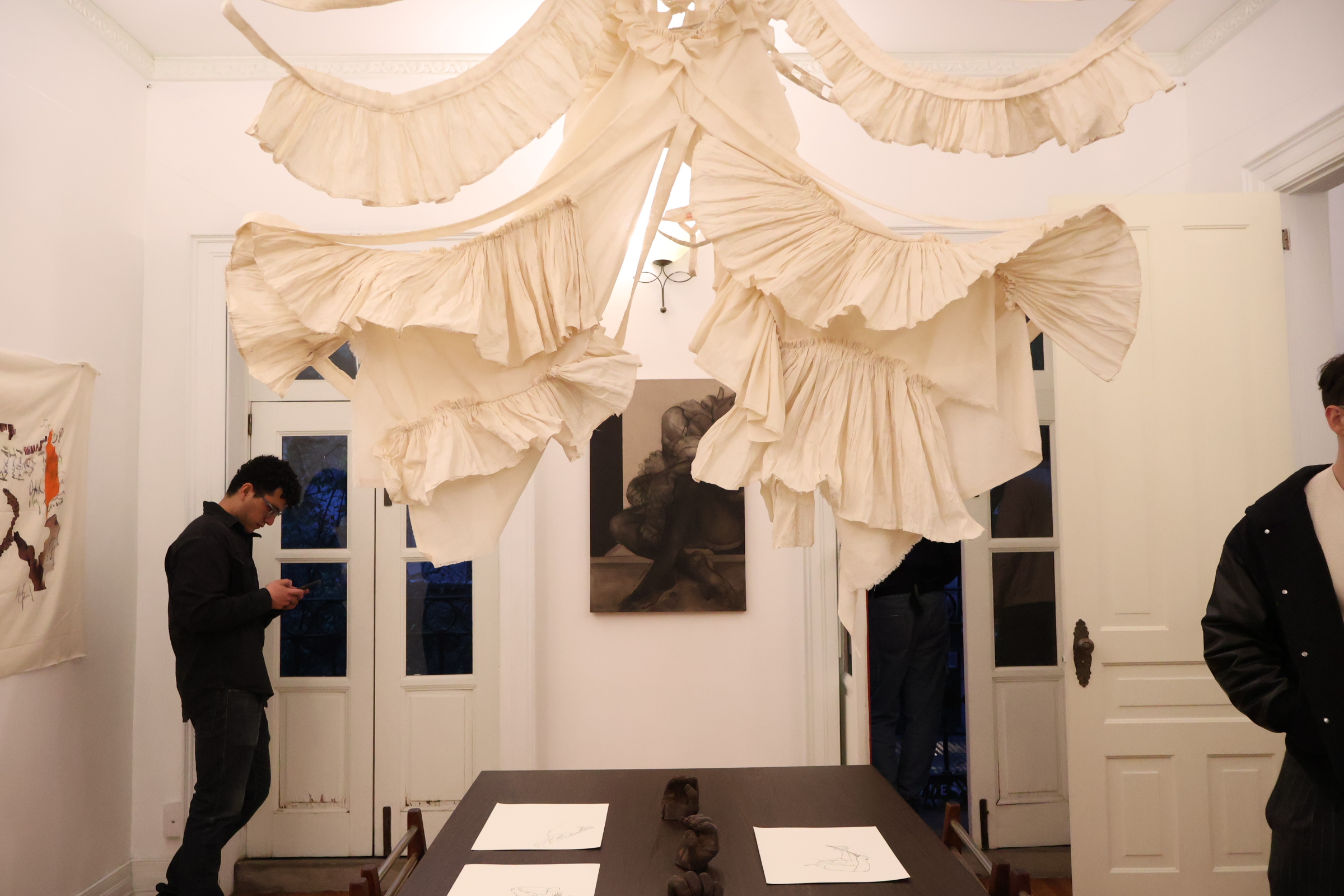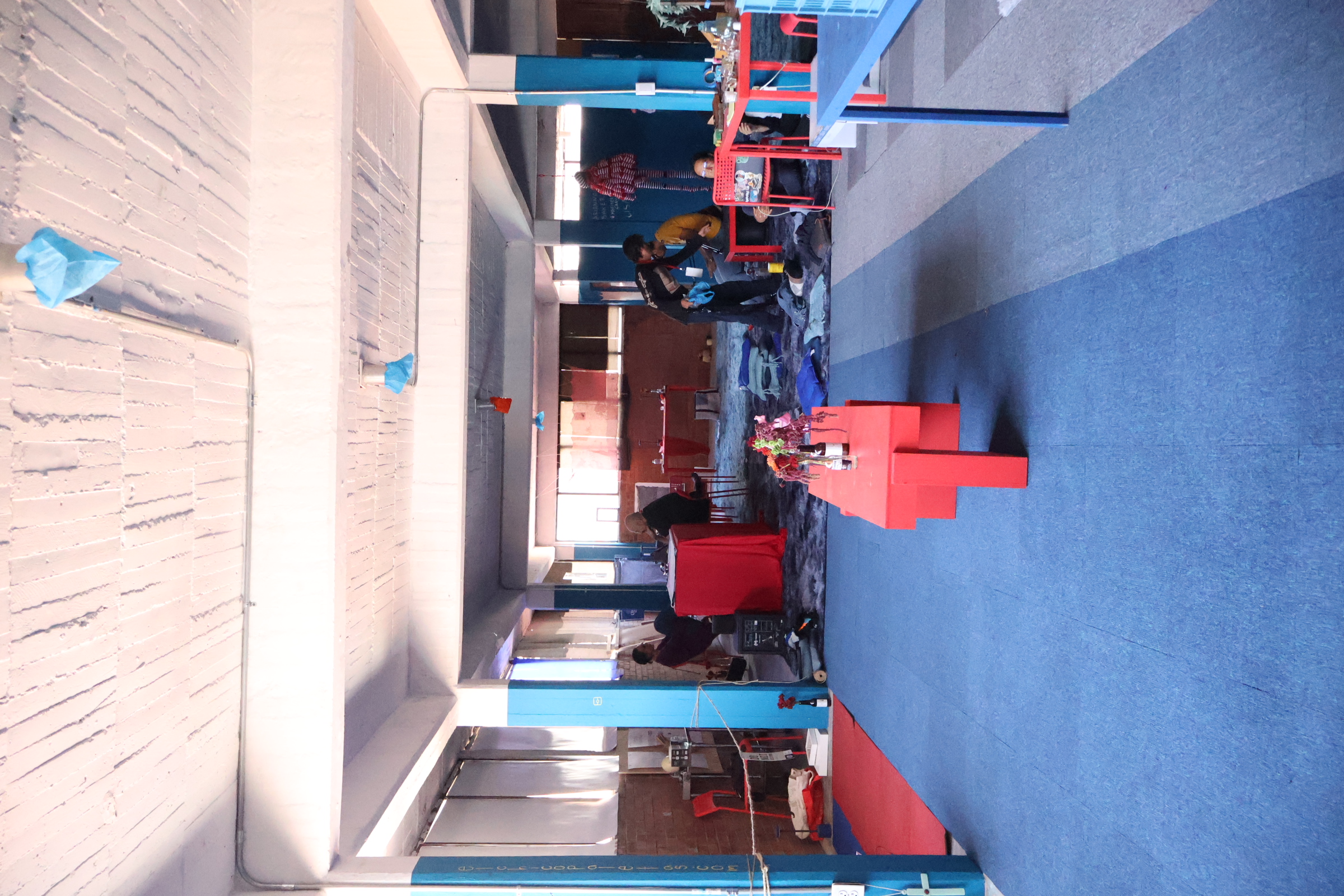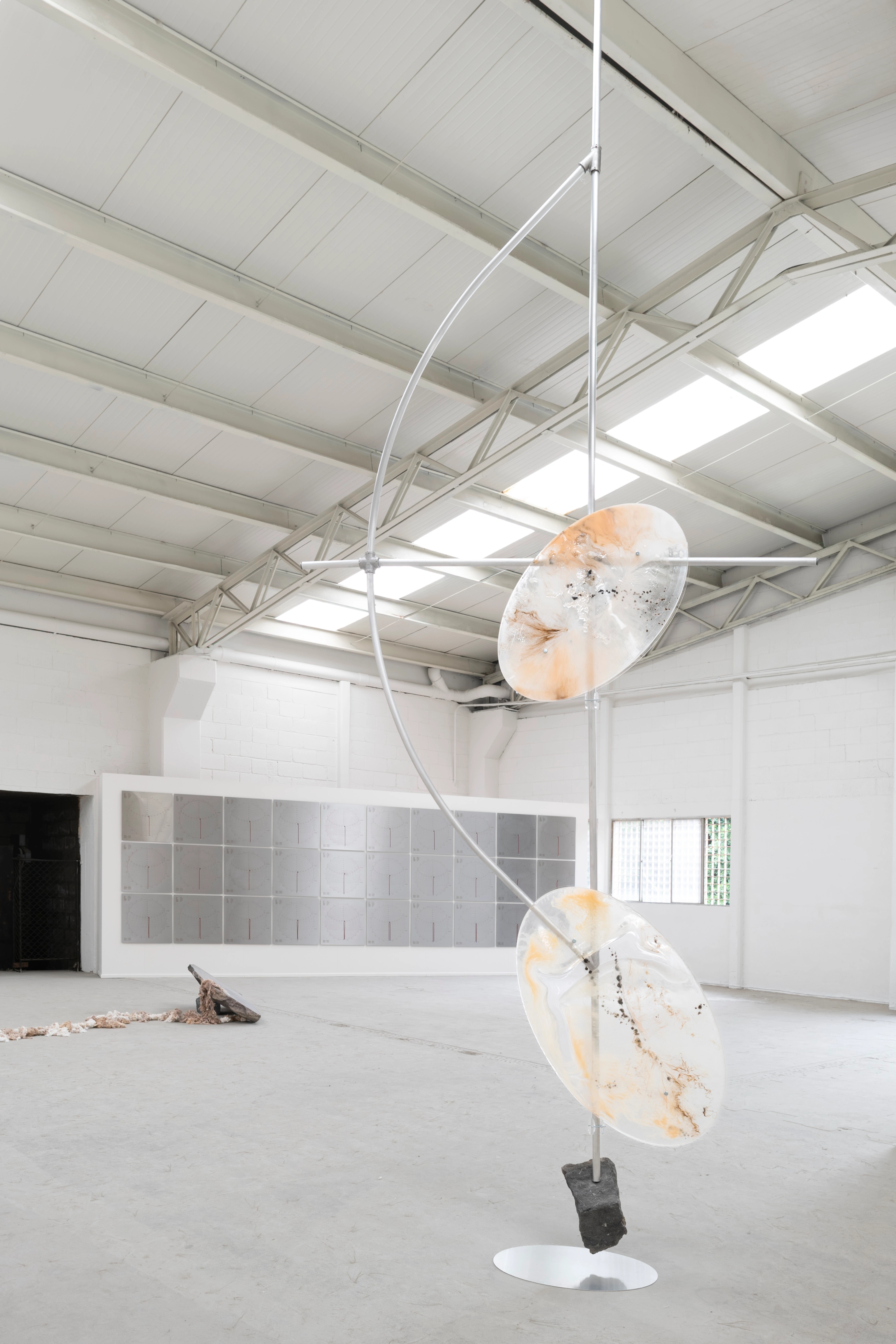
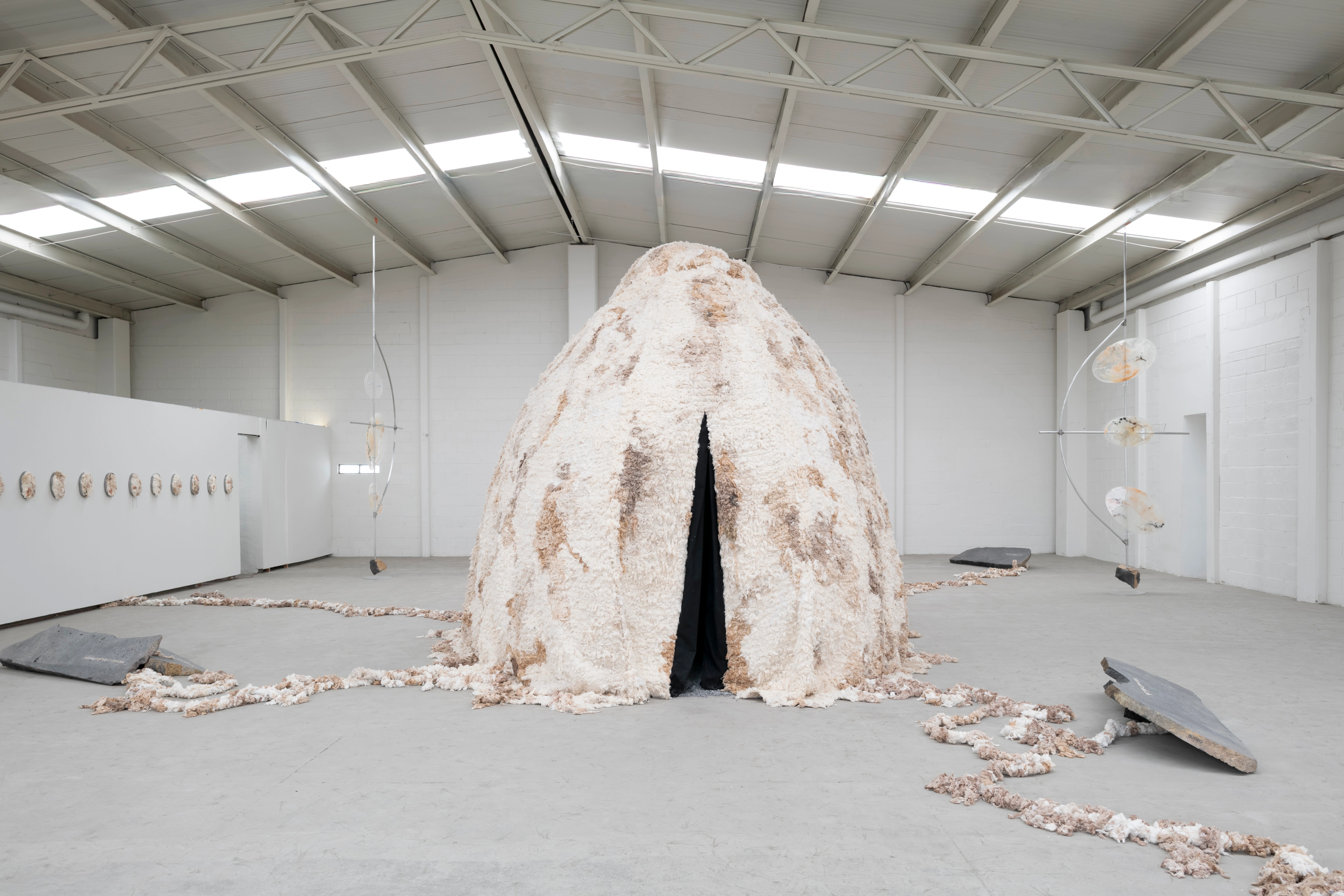
KiefferWoodtli, AXES (2026). Installation view. Photo courtesy from the artists.
Orbita: How do you think geometry and philosophy are related to your practice?
SK: For us it’s interesting how our orientation as human beings always comes from the relation between two points or concepts, this dual forms of existence, be that darkness and light, chaos and order, but also our perception as human beings matters too. This was a very big epiphany for us as artists, as human beings, and even more interesting since the cave we were in was also elliptical shaped. In geometry, the ellipse always holds two axes and main nodes, two apsis, there is no center point.
We have talked a lot about this because in another life, me and him [Sara referring to Lucien] would probably have been philosophers… We talk a lot about the big questions of life. It's funny how we as humans always try to have one single point of view, this is wrong. If we look at most cultures, there is always a circle, a middle point, while everything comes from one point being true or false.
Orbita: Like the self, right?
SK: Exactly! If we were to revisit this concept we would see that actually there is not one single point, instead there’s always multiple relational points. The way we as humans develop ourselves and our personality always happens in relation to other people, to different points of view. Our interest for the geometrical forms, specifically the elliptical one, is our philosophical lay ground for the expecience we want to share with this exhibition. In our body of work, we always try to integrate data of the natural world to help visitors explore their experience with the natural, and create an experience that is more understandable to us humans through feeling and emotions, because there are many invisible processes that shape our world and our preception of it.
Orbita: I think that's very interesting, there's this cult to data nowadays as if it was like knowledge in itself. How do you think data could be understood better, and what remains hidden behind it?
SK: You’re right. We live in a world with so much information around that we need as a reassurance of our reality. I think we forget that data is just numbers and facts, which is not special or important until we integrate our perception with that information and decide what to do with it.
LW: Emphasizing on that, for us data is more like a tool or almost another material that we use to create our work. We never use data for the sake of using it, we think of it as another layer to help us get the message across, I think that's really an important part. We’re super conscious about when to use data and when not to use it, and we also think about where it can really add value. Here [inside Cave], for example, we use data for the light beam trajectory; the beam moves according to the actual sound over the space. Like Sarah said, we wanted to simulate this ray of light that came into that cave we were in two years ago.
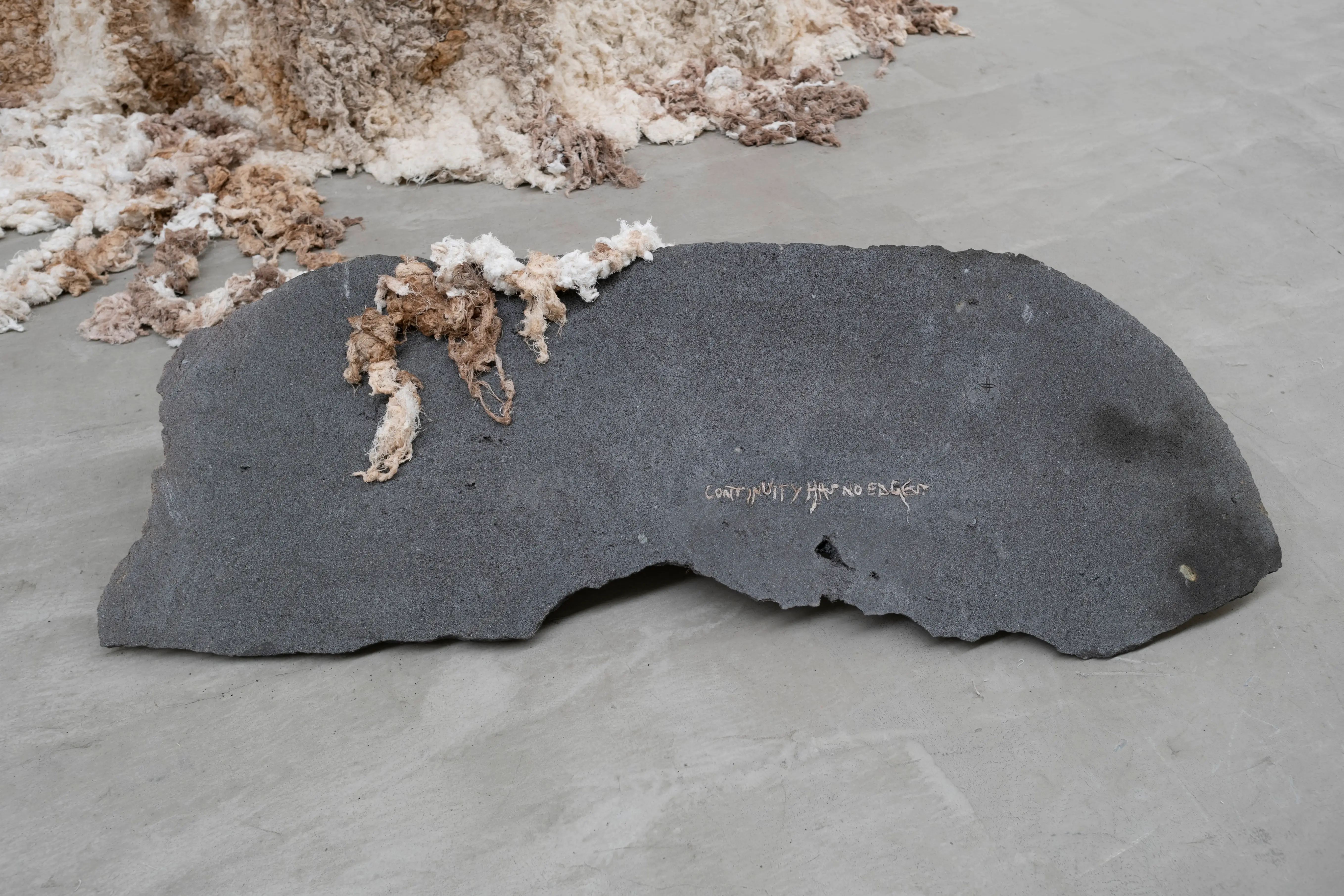
KiefferWoodtli, AXES (2026). Installation view. Photo courtesy from the artists.
Orbita: You were mentioning the elliptical shape as a philosophical standpoint and how there's always two parts to things, it’s curious because there’s two of you–you're an artist duo. Would you describe your practice as elliptical?
SK: 100%. Yeah, in a lot of different ways. Us being two different humans with two different perception points of everything. Thinking that the three of us will walk out of this experience each with a totally different perspective of this conversation is interesting but also a gift and a blessing for our work, because each experience enriches our practice.
LW: And I think it keeps it also very interesting, because it's a never-ending dialogue about all the big questions of life. We as human beings more or less perceive what is happening around us. That's also one big part of what drives this exhibition, our whole practice is actually also in elliptical form all the time, without even knowing it before or not being fully aware of it before.
Orbita: This Cave reminds me of a temazcal, and I think of that because sometimes our rationality and obsession over data blocks certain ways of perceiving things. I’m not saying that magic actually exists, but we often block a more magical perspective of the world in favor of a more rational one. How do you think that this exhibition is related to feelings and magic?
SK: For me sitting inside of this cave, in the darkness, where the senses merge to one, is already magical–being able to concentrate on yourself and your surroundings and really pay attention to the energy you perceive. For example, you normally wouldn't feel or think that “magical”, in your words, or hidden processes are happening all the time around us. That is central to our practice, to make people aware that we can’t even see, hear, smell or feel a lot of the things are happening. For me, this experience in particular was very, very magical, because it opened up so many different ideas and thoughts inside my head. It also makes me think of a previous piece of work where we translated the inner being of a tree into an ever-changing art piece. Getting to know a tree better, to learn the many different things a tree is also perceiving that are invisible to us is a very magical process.
LW: I think it's super interesting because I think we live in a world where we have all this data, right, and there is so much technology. Technology is a very big word, and even though it is as old as human beings, the technology that we're using today mainly focuses on measuring a lot of things, and measure became our religion. Science too. We're still intrigued by science and measurable things, that’s great and it's important for us, but I think if we start relying only on what is measurable and what can be seen, we're losing a big part of ourselves as humans.
Through our work, we try to bridge everything together again, bringing in the magical. What is magic? It's the wonder of this world, right? The little things when you just stop and stare for a while or have the opportunity to sit in stillness and listen to what happens around you. When we measured the inner life of a tree we translated different data points into an ever-changing visual soundscape. We want people to sit still and be in awe of this thing that is so common that it doesn’t seem magical to us, until you listen closely. I believe that by merging the measurable with our inner magic, our mind, then real knowledge can happen too. We can connect knowledge with our feelings and I think this is very strong and very magical.
-
It is possible to visit AXES until July 10th 2026 at Alvarez Chida, at Espacio Báltico in Mexico City. Entrance is free of charge Tuesday through Sundays from 11:00 am to 5:00 pm. For more info on the artists’ work, visit www.kiefferwoodtli.com

%201%20(1).png)