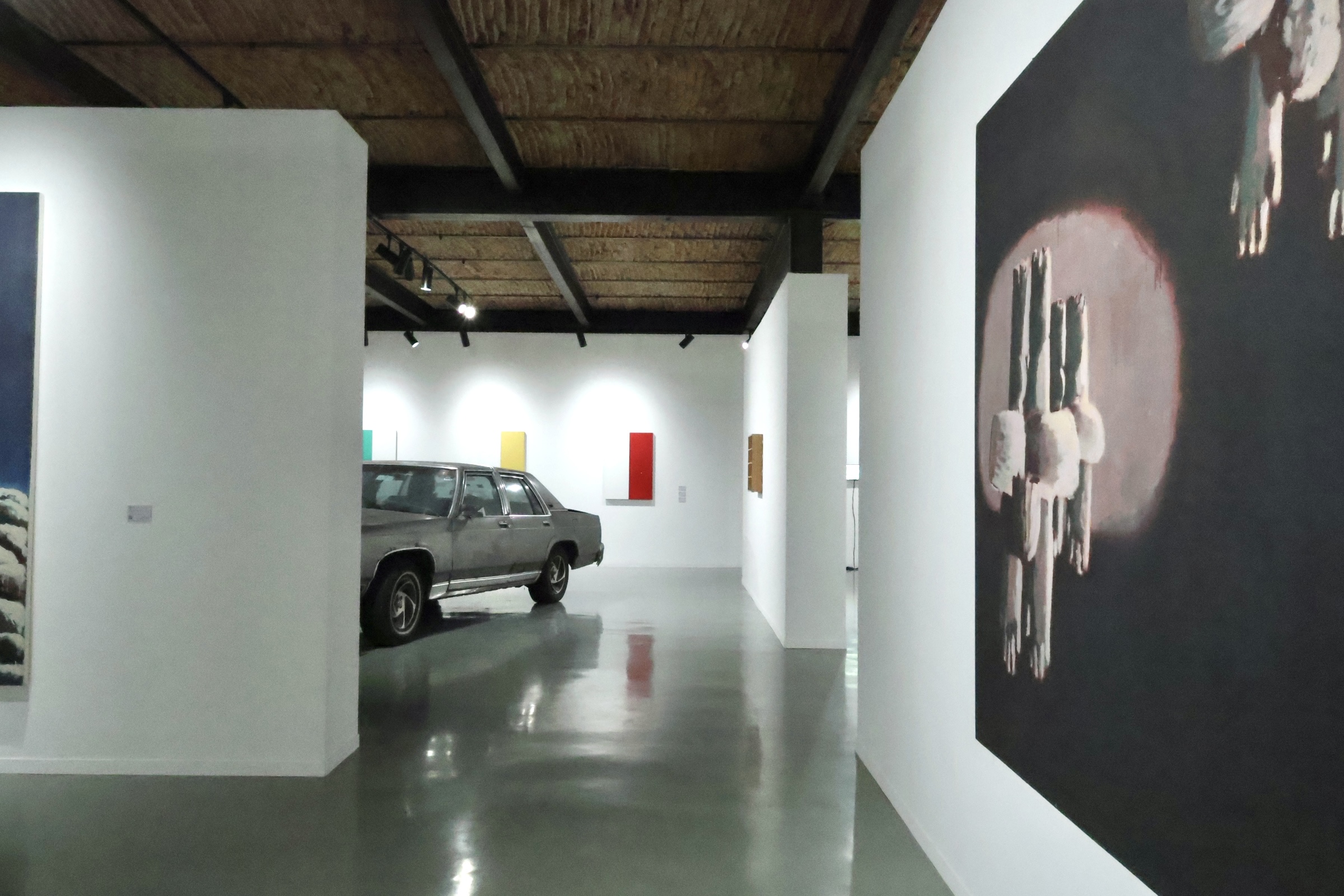
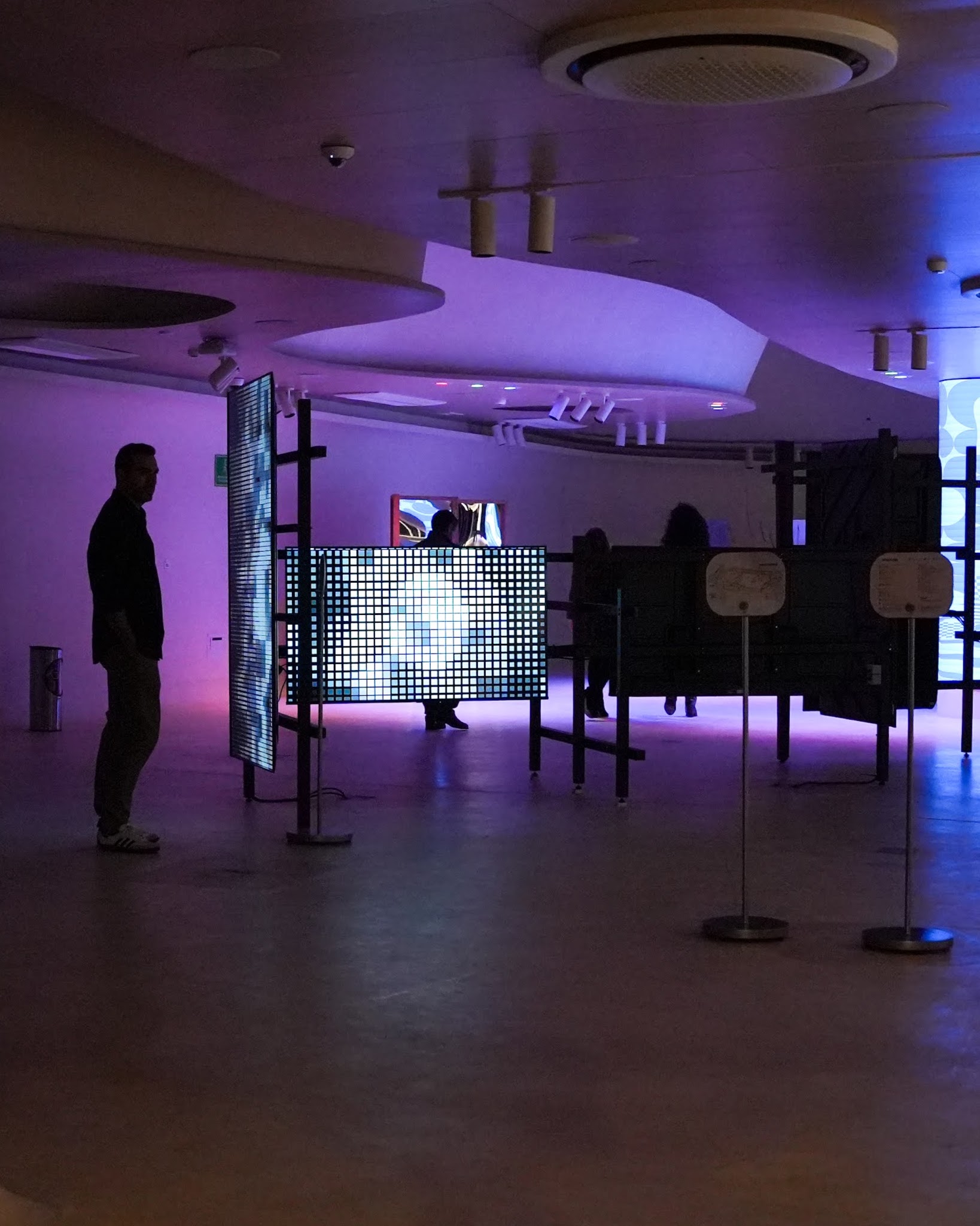
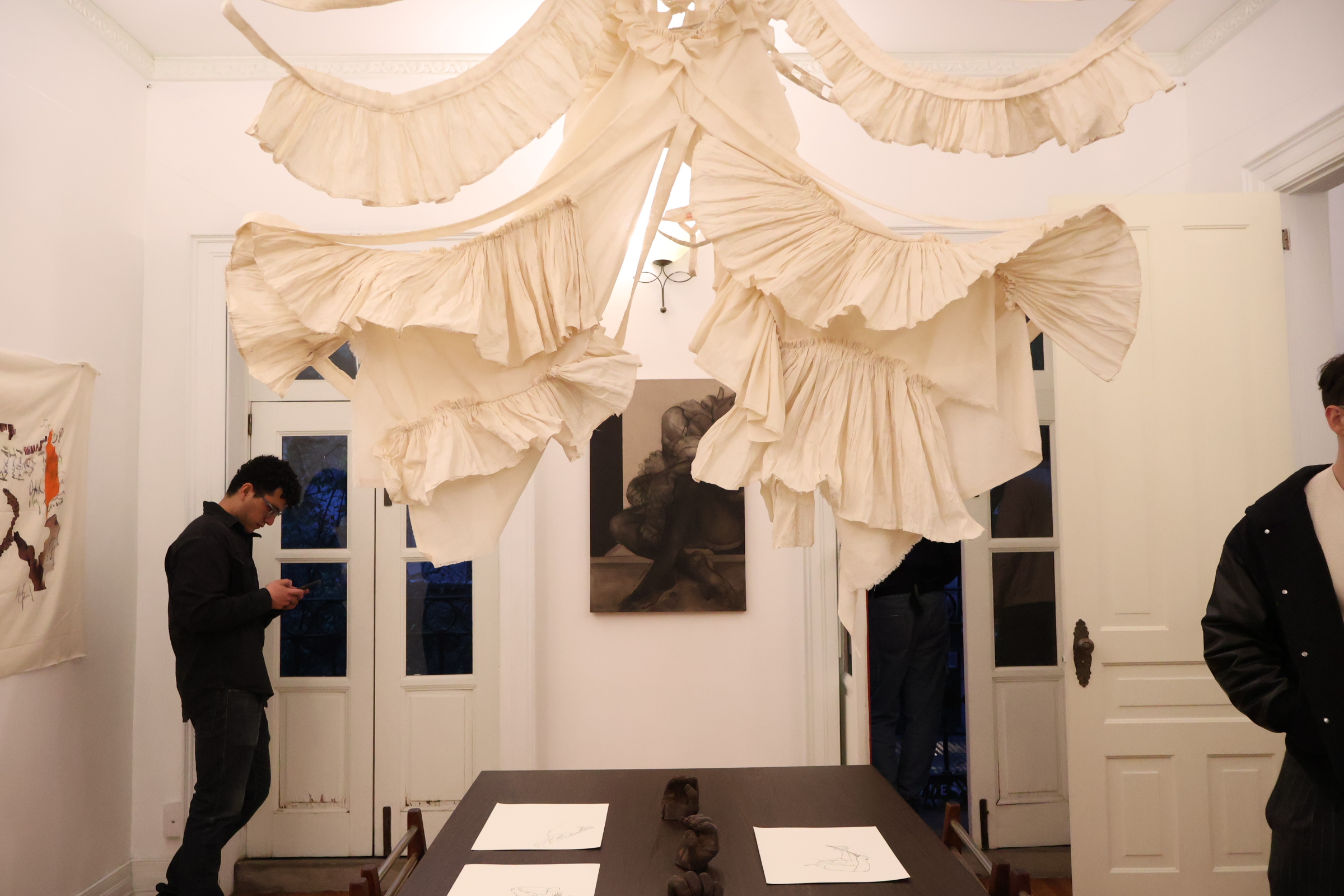
Karla Kaplun, Donde reposa el ídolo (2026). Photo courtesy of Manuel Pidal.
This research, which is part of the Acervo Artístico Documental (Documentary Art Collection) program, arises from the presence of two elements whose coexistence in the same space is contradictory: the Cristo de Santa Teresa and the painting of the uprising of the Indigenous people of El Cardenal, made by Rafael Ximeno y Planes for the chapel of the former church. The painting depicted an Indigenous uprising following the relocation of the religious image of the Cristo de Mapethé (now known as the Cristo de Santa Teresa) from the town of Ixmiquilpan, Hidalgo, to Mexico City. The people of Ixmiquilpan attributed several miraculous events to the image, such as preventing people from dying for periods of five years and bringing rain in times of drought, among others. The painting was destroyed during an earthquake in 1845, and of this composition only a preparatory model survives, which currently belongs to the collection of the Museo Nacional de Arte (MUNAL).

Karla Kaplun, Donde reposa el ídolo (2026). Photo courtesy of Manuel Pidal.
The simultaneous presence of these two elements leads the artist to ask, “What does it mean for a religious image to share its place of worship with the representation of a rebellion originating precisely from the dispossession of that image?” It is this contradiction that informs Kaplun’s visual research, which observes how the religious symbols and images that make up a space are transformed over time, by the territory they inhabit, and by the political contexts and institutions that pass through them. Presenting this research in the form of an archive is intentional, as it allows these religious objects to be seen through a critical lens; that is, it allows them to be seen more as reference material than as objects of devotion. Religious symbols, Kaplun proposes, can also be examined as instruments of representation and legitimation of power. The atlas as a whole makes it possible to identify the operations and situations through which an image acquires meaning.
The documentary atlas completes the first phase of the project, which will be the foundation for its second stage: a triumphal arch inspired by the ephemeral structures used during the viceregal period to receive and celebrate figures of authority. As part of this first exhibition, a model of this monument was included. The proposal seeks to invert the historical meaning of this type of structure: rather than passing through the arch to welcome power or to enter its narrative, one passes through it to leave that narrative behind.
Through the dialogue between these two phases, “Donde reposa el ídolo” extends its research toward contemporary forms of political and religious representation, questioning which images and symbols continue to organize our relationships with power.